
Anthropic’s Claude Push Into Business Workflows Ahead of IPO: What SaaS Buyers Should Test
A product dilemma: move into business workflows before the tools feel complete, or wait and let incumbents define the buying moment. Anthropic is choosing speed. As it approaches IPO, Claude is expanding from engineering work into spreadsheet and app-embedded tasks, while its annualized revenue reached $81 billion as of October 31 and the company seeks a roughly $1.4 trillion fully diluted valuation, so buyers should test Sheets drafting boundaries, embedded app permissions and post-listing pricing.
Why is Anthropic widening Claude’s target buyer now?
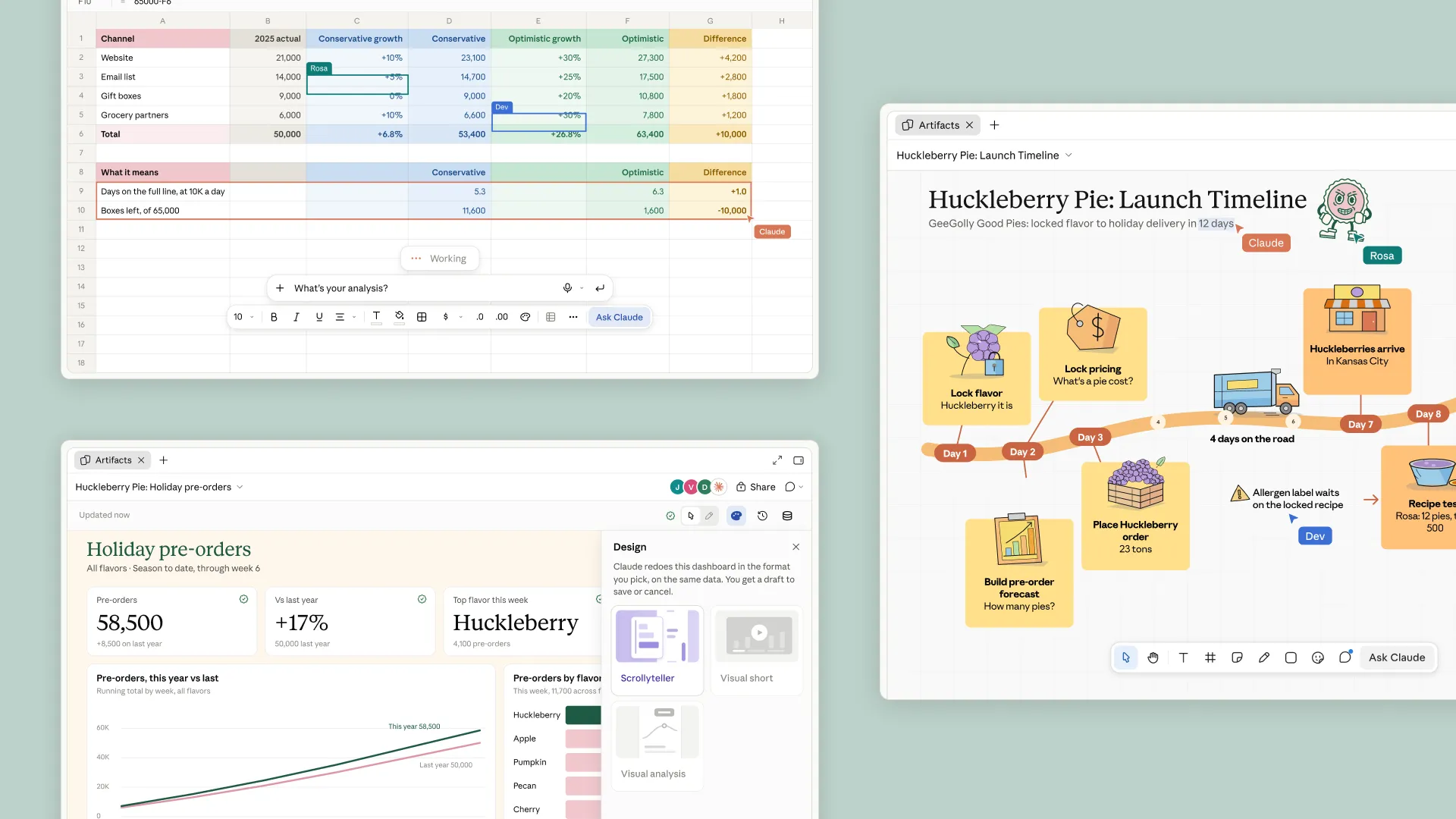
Because the company needs a broader demand surface before its public-market debut. Claude has already become a default tool for software engineers who use it for code writing, debugging and documentation. The new hypothesis is that business professionals will pay when AI removes routine preparation inside work they already own: spreadsheets, meetings, CRM records, project hand-offs and customer-support notes.
For SaaS buyers, that is a commercial signal, not a feature list. Product-led growth, meaning acquisition through low-friction use before a sales cycle, is now being applied to knowledge work rather than only to engineering. Average contract value, the annual dollar size of a signed deal, may rise if departments see Claude as a workflow layer. Net revenue retention, renewal plus expansion minus churn as a share of existing revenue, becomes the real test once first pilots convert to budgets.
What does Claude Sheets do, and where does it stop?
Conclusion: treat Claude Sheets as a drafting and cleanup aid, not yet as a finance-grade modeling environment. Anthropic product lead Nicholas Lin said the product is “rather basic” and not aimed at advanced financial modeling. In those deeper cases, he said Claude add-ins for existing spreadsheet software are more effective.
Lin said: “I think Microsoft and Google products still have their place at certain times and scenarios, especially in more advanced enterprise use cases. But we also want to show new ways of working inside Claude.”
At 12:43 p.m. New York time, Microsoft shares were down 3%. That reaction shows public-market investors are already pricing the overlap between AI-native tools and office suites. The more important buying question is not whether Claude can open a spreadsheet, but whether it can preserve model ownership, audit history, permission boundaries and recalculation discipline when a spreadsheet becomes a shared financial control document.
Why do Adobe, Atlassian and HubSpot matter more than the product demo?
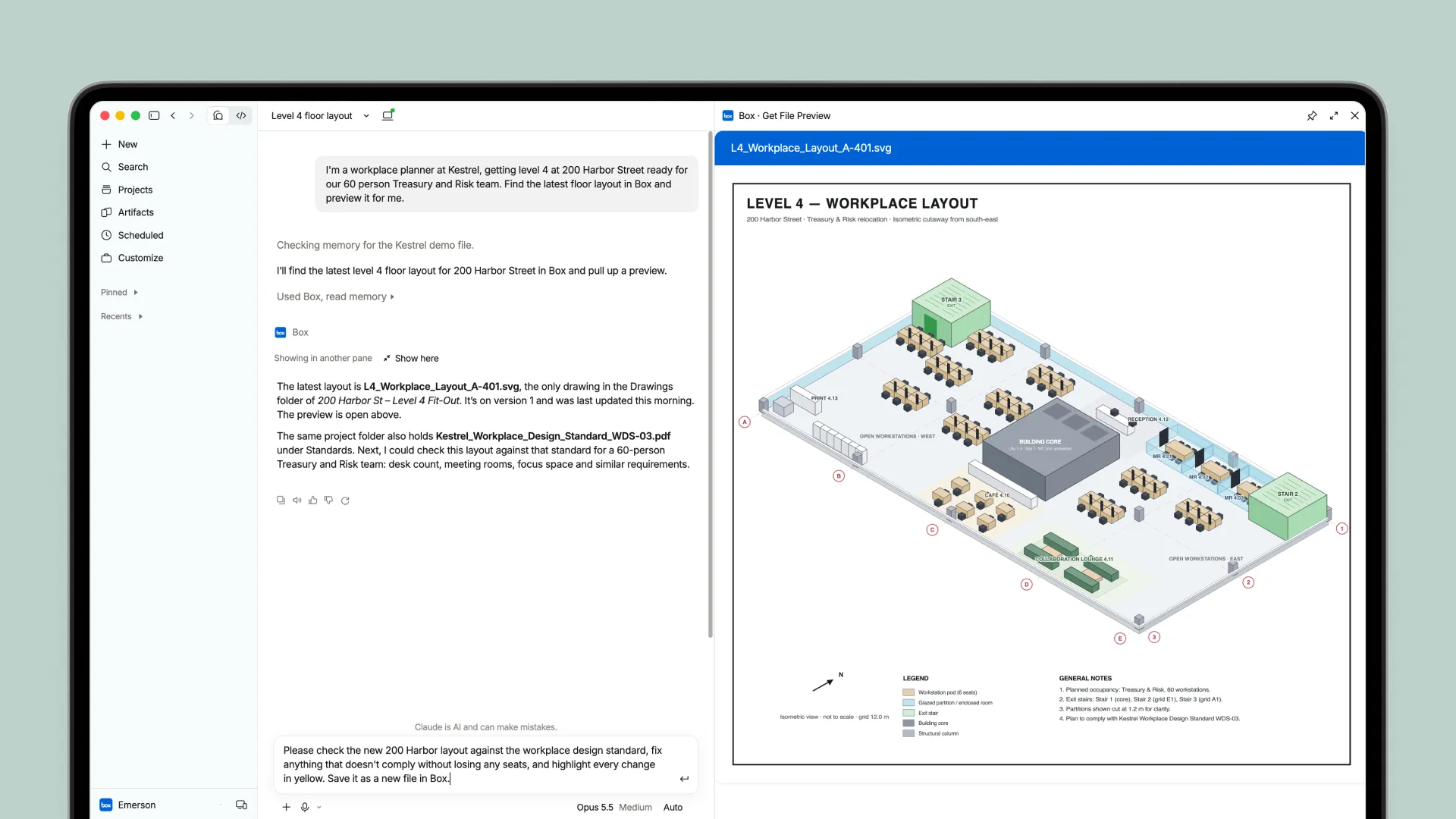
Because those partnerships change where the user sees value. Anthropic said Adobe, Atlassian and HubSpot may embed a version of their existing applications inside Claude. That lets buyers start from known workflows instead of moving everything into a new workspace.
Atlassian’s partnership guide for Claude lists several ways to connect Jira and Confluence, including skills and MCP-based connections, which are practical paths for teams that do not want to abandon current systems. HubSpot’s connector documentation frames the integration around CRM data access and setup for marketing, sales and service teams. Those details matter because enterprise AI value is usually blocked by permissions, not prompts.
But Anthropic is both partner and competitor to these companies. So far this year, that dual role has repeatedly raised concern that AI tools may make traditional enterprise software products outdated. A buyer should not read co-opetition as sabotage. The useful interpretation is channel pressure: if a general-purpose assistant becomes the front end, application vendors may need to defend data, workflow state, compliance controls and pricing.
What IPO and revenue data changes the decision?
It proves demand but also makes concentration risk visible. A filing released Tuesday showed that, as of October 31, Anthropic’s annualized revenue reached $81 billion, up $10 billion from the end of September. The company is seeking an IPO valuation of about $1.4 trillion on a fully diluted basis.
Fortune reported that Anthropic’s S-1 also showed $16.3 billion in first-half revenue and an $80.7 billion net loss. The point is not to replace the master revenue anchor with a profit claim; annualized run-rate and GAAP profit are different lenses. For founders, product heads and procurement teams, the practical reading is simple: adoption is expanding quickly, while capital intensity remains high. That can create pricing pressure later, especially around inference costs, compute commitments and enterprise service-level expectations.
What should SaaS leaders do in the next 30 days?
| Decision area | What to test | Stop signal |
|---|---|---|
| Claude Sheets pilots | Use it for draft table creation, meeting notes to rows, and non-controlled cleanup. | Break audit trail, alter formula dependencies, or require manual re-checks more than twice per task. |
| Embedded apps | Run Adobe, Atlassian and HubSpot tasks inside Claude with read-only data first, then limited write actions. | A CRM or project write path becomes harder to roll back than the old UI. |
| IPO exposure | Ask for model-usage pricing, contract portability, and incident reporting during the public-listing transition. | The vendor cannot explain how procurement commitments will be passed to customers. |
FAQ
Is Claude Sheets ready to replace spreadsheet tools for finance work?
No. Nicholas Lin’s description, “rather basic,” should be read as a product boundary. The safer pattern is to use Claude Sheets for preparation and simple analysis, while keeping advanced financial models inside the spreadsheet platform that already owns versioning, formulas, controls and approval history.
Why would Adobe, Atlassian and HubSpot allow Claude to embed their apps?
Because distribution is becoming an AI interface problem. A customer who stays inside Claude may still need Jira tickets, HubSpot records or Adobe assets, and the vendors want that demand to route through them. The trade-off is less interface control in exchange for a new entry point.
Does the IPO mean Claude is already mature enough for enterprise deployment?
Not automatically. The Tuesday filing gives a clearer revenue picture than private-market rumors: $81 billion annualized revenue as of October 31 and an increase of $10 billion from the end of September. Public listing also brings disclosure and scrutiny, but it does not remove integration, security, governance or switching-cost questions. Readers tracking that valuation context can compare this site’s Anthropic IPO data watch.
What should a SaaS buyer ask about model cost after the offering?
Ask how per-seat plans interact with usage-based inference, what happens when compute commitments rise, and whether discounts lock in only until the next contract cycle. A clean test is to compare total workflow cost, not prompt quality: hours saved versus review hours added.
Sources
- Fortune: Anthropic S-1 revenue and loss reporting
- Atlassian: Anthropic partnership guide for Claude
- HubSpot Knowledge Base: Claude connector setup