
Cat Wu Leaves Anthropic Before the IPO Window: Eight Decision Questions for Claude Code Buyers and Boards
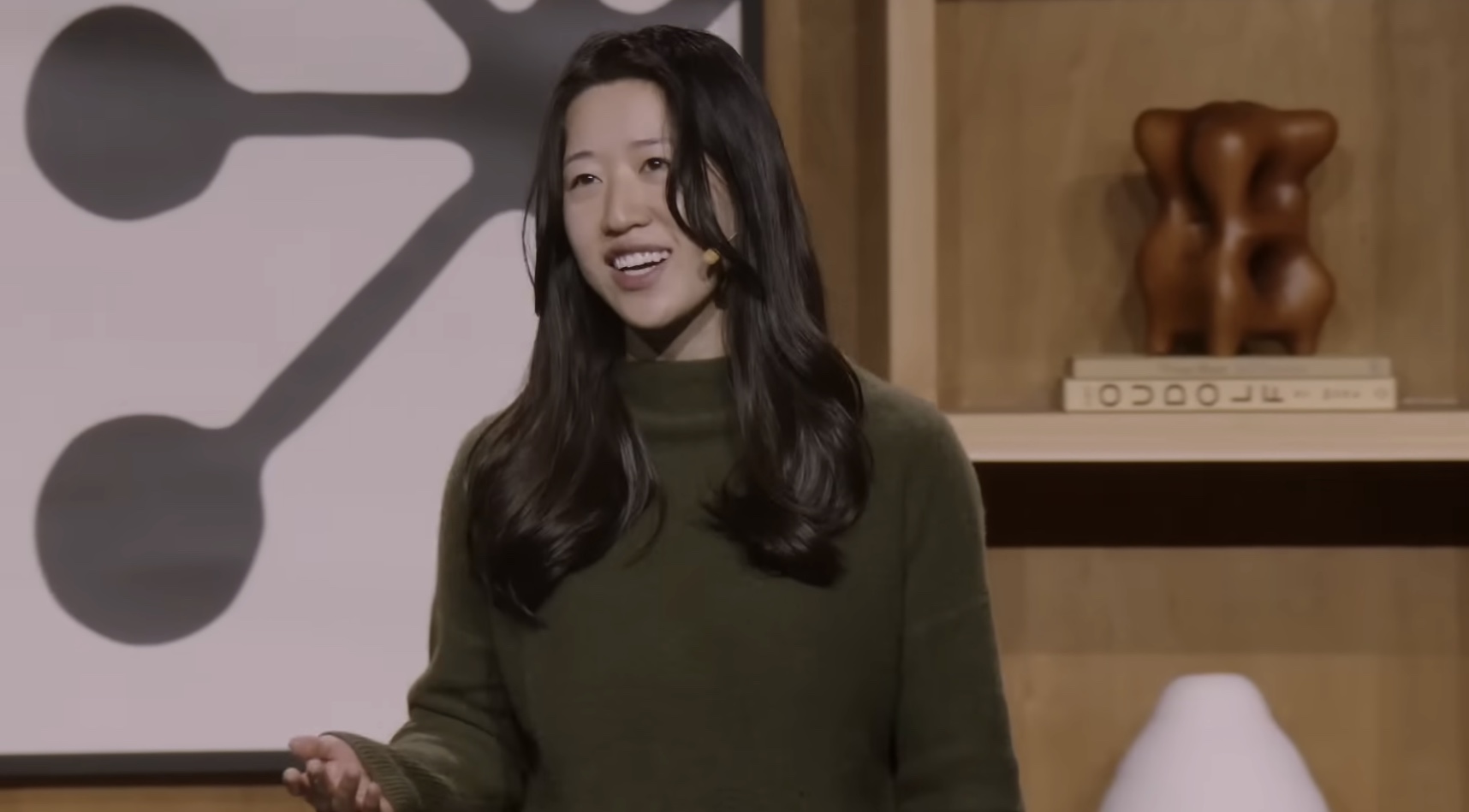
Quick read. When a headline product owner walks out, a procurement lead or an investment analyst does not need the backstory; they need a verdict on three variables only: roadmap continuity, named ownership, and price volatility. On local time on November 3, Cat Wu posted on X that she was leaving Anthropic, thanked the Claude Code team and its users, retraced how the tool grew from an internal prototype into an industry bestseller, and disclosed neither a reason nor a next stop. Anthropic confirmed the departure. Because Thariq Shihipar, another engineer credited with building Claude Code, had already announced his own exit last month, a second departure inside one quarter turns a personnel story into a governance story — and it lands while the company prepares what is expected to be the largest software listing in years. GlobalSaaSManager has reframed the news below as the eight questions your team should have answered before the next renewal or diligence call.
What is confirmed, what is only reported
Separate verified record from market chatter before you brief a board or a CIO. The confirmed chain is short: Wu's own post on X, Anthropic's confirmation, and the absence of any stated successor.
| Time marker | Record | Decision relevance |
|---|---|---|
| Summer 2024 | Wu joins Anthropic after her first hands-on test of the early Claude Code prototype convinced her the capability was real | Institutional memory of the product spans barely 16 months |
| February 2025 | Claude Code launches as a research preview, introduced to the world in a short demo video starring Wu and Boris Cherny | The product's external identity was carried by two named individuals |
| That same summer | The pair briefly leave Anthropic for the AI coding startup Cursor, then return weeks later to keep leading the product | Precedent: this team has already been bought once on the open market |
| End of 2025 | Claude Code's adoption accelerates sharply; software engineers first, then enterprise customers at scale | Developer pull converts into Claude model consumption and revenue |
| April this year | Podcast interview: her stated goal was steering Claude Code toward the "AGI-native version" Cherny had in mind, with AGI meaning artificial general intelligence | Roadmap was framed around a personal thesis, not a public charter |
| Last month | Thariq Shihipar announces he is leaving Anthropic | First crack in team stability, noticed by the developer community |
| Local time on November 3 | Wu's farewell post on X; Anthropic confirms; no reason, no destination | Coincides with the reported roadshow window for the listing |
Still unverified: who now owns the Claude Code roadmap, who owns Cowork, whether further exits follow, and whether Anthropic adds product-team language to its risk factors before pricing.
Eight questions that decide your next move
1. Was she really one of only two people who mattered?
That is the reading of most coverage, and it is why this exit is priced differently from an ordinary resignation. Wu and Cherny were treated as the two core figures of the project: Cherny is credited as its creator, while Wu drove development, commercialisation and go-to-market together with him. Under them, Claude Code moved from an internal experiment to one of the most influential products in AI coding — and became a central weapon in Anthropic's challenge to OpenAI's competitive position.
2. What breaks when the public face of a product leaves?
Not the codebase; the operating layer. Wu described her job as far wider than product planning: coordinating with marketing, sales and finance, hiring product managers, and replying directly to user feedback on social media. Products at this stage are tuned conversationally, daily, by named humans. Ask your account team who inherits those threads.
3. Does the roadmap change direction?
In April this year she said the aim was an "AGI-native version" of Claude Code, i.e. a system able to perform a broad range of tasks at near-human level — the definition of artificial general intelligence applied to a coding agent. A thesis that personal usually gets restated after the author leaves. Expect a re-scoping cycle in the next release train and test your own upgrade assumptions against it.
4. What happens to Cowork?
Wu also ran Cowork, the AI work assistant aimed at people who are not software engineers, built on Anthropic's core Claude model capabilities and pointed at knowledge work. Cowork shipped as a research preview for high-tier Claude subscribers and was extended from desktop to web and mobile during 2026, according to SiliconANGLE. If your non-technical teams have started piloting it, ownership ambiguity is now a live procurement question, not a theoretical one.
5. Is key-person risk compounded by customer concentration?
Partly, yes. Anthropic's publicly filed prospectus discloses roughly 250 customers generating $10 million or more of revenue on a trailing-twelve-month basis (SEC.gov, S-1), and Reuters reported that nearly a quarter of company revenue came from two customers last year. A thin layer of product leadership on top of a thin layer of revenue anchors is exactly the combination risk committees flag.
6. Are we exposed on price and capacity, not just people?
Watch commercial mechanics, not personalities. Anthropic's own newsroom announced in May 2026 that it was doubling the five-hour rate limits for Pro, Max, Team and seat-based Enterprise plans, then a permanent lift to standard weekly Claude Code limits announced on August 29 for effect on September 14. Meanwhile, The Information reported on October 5 that Microsoft and Meta were compressing internal Claude use, with Microsoft said to cut projected annual internal spend on Anthropic technology by more than a third and steer staff toward GitHub Copilot and in-house models, and Meta said to halve its internal Claude Code user base. Read this as a signal that even the largest accounts are renegotiating usage terms, so rate-card stability is not a given for anyone.
7. Should we switch vendors now?
Not on a resignation. JetBrains' developer research published in August 2026 records Claude Code as the most-used AI coding tool for 31% of developers, so the switching cost is real: agent workflows, repo-level conventions, CI hooks, audit trails and trained staff. GitHub is itself moving Copilot toward usage-based AI credits, which means a switch trades one pricing model for another rather than eliminating volatility. Run a dual-track evaluation instead of a flight.
8. What should we demand from the vendor this week?
Three things in writing: a named product owner for your account, a support and escalation SLA that survives staffing changes, and a notice period for limit, price or plan-boundary changes.
Impact analysis: where the risk actually lands
Investors and the listing calendar
Bloomberg reported in early October that Anthropic was targeting a mega-IPO before the Thanksgiving holiday, with marketing potentially starting the week of November 9, while MarketWatch's IPO timeline notes a roadshow window and a first tradable date around the week of November 16, against valuation speculation that has reached as high as $2 trillion. Claude Code is widely read as one of the growth engines behind that number, so whether management change is absorbed quietly is itself a diligence item for the offering.
Founders and rival labs
The earlier Cursor episode is the more useful signal for competitors: talent in agentic coding is liquid and expensive, and an IPO liquidity event opens a second departure window. Rival vendors will pitch migration during exactly this interval; treat unsolicited urgency as a sales motion.
Enterprise buyers and CFOs
For buyers, the event changes nothing about the technical merits and a great deal about forecasting. A tool that automates large volumes of coding work now has two vacancies in the team that defined its roadmap and messaging, at the same moment that the biggest customers publicly tighten budgets. That combination should push AI coding spend from an informal developer line item to a governed, contract-managed category.
Data points worth pinning to your memo
- Time between Wu joining Anthropic and the public research preview: roughly six months — the product's whole commercial history is short (master record, corroborated by company posts).
- ~250 customers at $10 million or more in trailing-twelve-month revenue, disclosed in the S-1 filed on SEC.gov.
- Nearly a quarter of Anthropic revenue from two customers in the prior year, per Reuters' read of the prospectus.
- 31% of developers name Claude Code as their most-used AI coding tool, per JetBrains research (blog.jetbrains.com, August 2026).
- Anthropic doubled Claude Code five-hour limits for Pro, Max, Team and seat-based Enterprise plans in May 2026 (anthropic.com/news).
- Microsoft and Meta reportedly trimming internal Claude usage in the October 5 The Information report — the same week the prospectus went public.
Renewal checklist: ten items before your next vendor meeting
- Ask for the named successor responsible for the Claude Code roadmap and the release notes cadence.
- Get change-notice terms in the contract: minimum 30 days for limits, plan boundaries and seat pricing.
- Model two cost scenarios for the next four quarters: current limits, and a 30% tighter usage envelope.
- Log which internal workflows depend on Cowork and who owns the pilot while vendor ownership is unclear.
- Confirm that agent-generated code is covered by your existing audit and IP indemnity language.
- Identify one alternative agent that can reach parity on your top three workflows within 60 days.
- Track the next three Anthropic engineering-team announcements for further senior departures.
- Read the final prospectus risk factors yourself rather than the news summary.
- Cap per-engineer monthly token spend now, before a limit change caps it for you.
- Put a vendor-stability review on the calendar at 90 days, timed after the listing.
FAQ: two-minute answers
Is Anthropic failing?
No evidence for that. Two departures and a public filing are compatible with rapid growth; the honest statement is that visibility on product leadership has dropped.
Should developers inside my company worry about tool access?
Access is contractual, not personal. The realistic risk is limits and pricing moving faster than your budget cycle, which the checklist item above addresses.
Does a resignation justify renegotiating price?
It justifies renegotiating terms — notice periods, support ownership, capacity guarantees — which is usually worth more than a discount.
What is the single best leading indicator to watch?
Whether a named product owner appears publicly before the roadshow concludes.
And if she replies about her own next step?
Asked under her farewell post whether she would finally take a long break, Wu answered "after AGI is achieved" — a joke, but also a hint that she stays in the same industry. Competitors hiring from this team would be another signal to log.
Action prompts for the next 30 days
Treat this as a governance event with a short fuse. Do three things: send the four-line ownership and notice-period request to your Anthropic account team; run one cost-scenario stress test on Claude Code usage against the October budget tightening reported at Microsoft and Meta; and put a 90-day vendor-stability review in the calendar so that the decision is made from evidence rather than from a headline. If the roadmap stays public, the owners stay named and the limits stop moving without notice, the resignation is a footnote. If those three conditions fail, you already have a documented paper trail and a dual-track alternative in place — which is the only real protection against a single person's decision to leave.
By Kai Brooks, GlobalSaaSManager. For corrections or to share your own vendor-risk playbook, write to info@globalsaasmanager.com.