
Google Search Ads Slow to 12%: A SaaS Decision FAQ on Rebalancing Budgets Toward Meta and ChatGPT
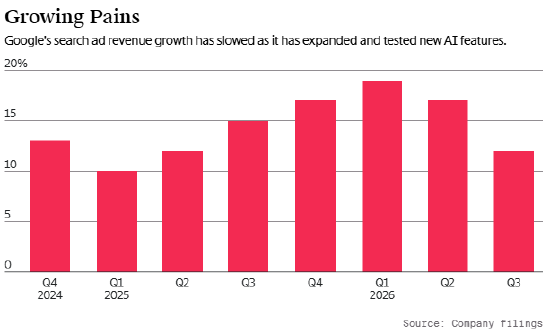
Direct answer: Rebalance, do not exit. Search advertising growth fell to 12% in the third quarter from 17% in the second quarter, Meta grew ad revenue more than twice as fast in the same period, and OpenAI pushed ChatGPT ads into 31 European markets. The decision is not which channel to cut, but which surface still converts a click into a product trial and a trial into annual contract value (ACV, the contracted revenue of one customer-year).
That is the call I have been arguing about internally since October 29, the day after Google's earnings release: freeze Search spend and shift it into ChatGPT and Meta experiments, or hold until the AI surfaces prove they can carry a revenue target. We sell a product-led growth (PLG) product, where the free trial does the selling, so paid media has to show up in trial-to-paid conversion, not impressions. We landed on neither option.
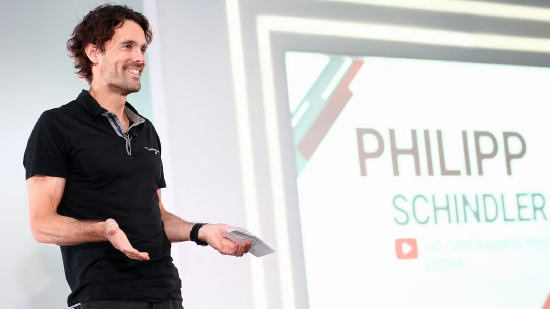
Philipp Schindler, Google's chief business officer.
What actually broke in Google's numbers?
Conclusion first: the revenue line is still growing; the growth rate and the quality of that growth are what slipped. Measured against the same full year earlier, search advertising grew 12% in the third quarter, down from 17% in the second quarter, and Alphabet shares fell nearly 13% on October 29. Alphabet's quarterly revenue rose 25% to $127.6 billion and Google Services rose 11% to $96.3 billion, while search and other came in at $63.35 billion against a $64.96 billion consensus, as CNBC reported. Meta, in the same quarter, posted $63.1 billion of Family of Apps advertising revenue, up 26%, with impressions up 10% and average price per ad up 14%, according to Meta's third-quarter prepared remarks. Two pools of nearly the same size, and Meta's rate of growth is more than twice Google's.
Philipp Schindler points at user behaviour: people increasingly do their research inside chatbots. "I wanted to put more money into Google, but I feel that part of this search traffic has been diverted to the way people research things themselves with large models," he said. For more than two decades, search dominance plus a fully automated ad system built one of the most profitable advertising businesses ever recorded. Now the company's own AI rollout is eroding it, while OpenAI enters from the other direction.
Why do AI surfaces earn less per query than keyword search?
Because the ad unit, the buying model and user intent changed at the same time. Before this quarterly report was released, Google had already shipped AI Overviews and conversational AI at scale as an alternative to classic results, and had been testing ad formats inside them. The timeline matters: AI Overviews launched in May 2024, AI Mode arrived nearly a year later, and the two products only started carrying ads several months after launch. Ads are no longer bound to keywords; they sit alongside long prompts and multi-turn conversations. Advertisers can neither buy the AI surfaces separately nor opt out of them, and Google's product documentation confirms that triggering queries are folded into standard campaign metrics.
This is the largest shift in search since the move from desktop to mobile in 2016, and it puts a $224.5 billion-a-year business at risk. For several consecutive quarters search revenue showed no weakness; growth only began to fade as usage of the AI features climbed. Two forces explain it: Google is deliberately controlling ad density so AI answers do not read like an ad page, and it is still working out how to price conversational placements rather than reusing the keyword auction.
In a statement Google said: "We take a measured approach, prioritising the best user experience, which builds a durable foundation for our customers and our business. Our ad experiments in AI Overviews and AI Mode are progressing well, and we are now scaling monetisation with formats that deliver advertisers a verifiable return on investment."
The behavioural gap is the harder problem. Prompts typed into AI Mode run about three times longer than classic searches, with richer context and more depth: someone asks "what tent should I buy for a week of hiking in the Sierra Nevada in September" instead of typing "tent". Fred Vallaeys, co-founding CEO of Optmyzr, who spent nearly a decade inside Google Ads, reads that as research-stage intent — users are further from a purchase, so clicks close less often. Working from the 21,000 ad accounts Optmyzr manages, many of them small businesses, Vallaeys calculated that in the third quarter the conversion rate on clicks across Google's platforms, including Search, fell 1.4% from the second quarter, and return on ad spend — revenue per one dollar of ad spend — fell 2.9%, the second consecutive quarter of decline after 3.8% in the second quarter. Over the past year advertisers also report that AI Mode shows fewer ads than classic search, so the same bidders chase fewer slots and automated bidding lifts prices.
Where is the shifted budget going, and how much of it is real?
Six advertisers and agencies describe buyers who are already re-weighting spend, and Meta is the main beneficiary. Meta ships comparable automated creative tools, and ads served by newer AI products such as the Muse agent appear beside short video and social updates rather than competing with the core feed. Meta has also begun pushing Muse Wonder-trained models to free users, widening the audience it can monetise later.
"This year, genuinely workable options beyond Google have appeared, such as ChatGPT ads and Meta. We redistribute budget based on delivered performance," said Farhad Divecha, group CEO of the marketing agency AccuraCast, who buys media for multiple brands.
On the ChatGPT side, distribution has run ahead of committed budget. OpenAI reports ChatGPT at 1.2 billion weekly active users, and from August 24 its ad programme expanded to 31 European markets, taking the footprint to 40 markets. Reporting by The Information, carried by Jin10, says advertiser counts rose from roughly 20,000 at the end of August to about 60,000 in early October, yet most clients still fund it from test budget of 1% to 5% of annual ad spend, with Sensor Tower estimating US October spend up about 40% month on month. For a SaaS team the read-through is blunt: the audience is real, the buying discipline is not.
| Channel | What you can buy today | Reporting transparency | Funnel role for SaaS |
|---|---|---|---|
| Google Search | Keyword campaigns; AI surfaces ride along automatically | AI and classic traffic merged in one total | Bottom-funnel demand, now softer on close rate |
| Meta | Full auction plus AI creative tooling | Mature, in-platform | Mid-funnel trial generation for PLG motions |
| ChatGPT | Sponsored placements in limited, expanding inventory | Early stage, self-serve growing | Top-funnel research exposure, weak proof so far |
What breaks first: measurement, not clicks
Attribution is the first casualty. When a buyer researches a category in ChatGPT and later closes on Google, nobody can prove which touch earned the deal; before chatbots, the search, the click and the order sat in one traceable line. Advertisers also cannot isolate AI performance, because Google reports AI Overviews and AI Mode data inside the existing search totals, leaving the placement, timing and reasoning of each ad opaque.
Google's answer is that the AI features are still scaling, so separate reporting will come later. In the meantime it has added reports showing which queries trigger ads, and shipped creative tooling such as Asset Studio, which draws on the Gemini Omni and Nano Banana models to generate image and video assets. "These features are essentially about adapting to the search paradigm shift that AI has brought," said Nick Stoltz, chief strategy officer at the measurement firm Measured, which works mainly with large retailers.
Behaviour on the buy side is changing too. Victor Batista, global search lead at the London digital agency Jellyfish, says advertisers are feeding Google far richer product descriptions so its AI can decide which conversations to enter, and many now judge campaigns on exposure rather than click-through. "The centre of value has moved from clicks to impressions; a lot of searches now end without one. Brands are competing to be recommended inside the answers AI gives," Batista said.
Under the surface, Google is negotiating partnerships and weighing acquisitions to make advertising in AI contexts worth more. People familiar with the matter say its corporate development team has looked at AI ad-creative tools, a category where Higgsfield, Runway and Typeface are pulling enterprise budgets away from traditional agencies. Google has also paid Hightouch to steer advertisers toward that start-up's customer-data sharing tool, because AI has magnified an old blind spot: Google often does not know what an advertiser's customer already bought, and many small and mid-size advertisers never send that data over. It has struck similar agreements with Adswerve, CustomerLabs, Datahash, Fifty-five, Jellyfish, Lytics, Tealium, Treasure Data and Zapier.
What should founders, CFOs and growth leads do in the next 90 days?
- Re-baseline blended customer acquisition cost (CAC) and CAC payback on September-to-November cohorts only; a 1.4% conversion-rate slip compounds into a different unit economy at renewal time.
- Split Google reporting manually: export search-term data weekly, tag queries that look conversational, and treat the merged numbers as a floor, not a measurement.
- Add one exposure metric to the scorecard — share of voice inside AI answers for your ten highest-intent questions — and pair it with a geo or cohort holdout so it stays an incrementality test rather than a vanity chart.
- Move purchase history and trial status into first-party audiences now, using the partner stack Google has assembled, because exclusion of existing customers is the cheapest efficiency available.
- Cap ChatGPT experiments at 5% of paid budget with a kill metric written in advance, such as qualified demo requests, never clicks.
- Track net revenue retention (NRR, renewals plus expansion from existing accounts) against channel mix: shallow AI traffic shows up as weak NRR two or three quarters later, long after the dashboard looked fine.
Decision FAQ
Is this a Google problem or a search-advertising problem?
For advertisers with a bottom-funnel offer it is a supply problem: fewer slots and merged reporting raise costs even while demand holds. Meta's 26% ad growth shows the money is available; it simply found better-supplied inventory.
Can we opt out of AI Overviews and AI Mode ads?
No. The placements attach to existing Search campaigns, and Google's documentation folds the query data into normal metrics, so your only lever is negative keywords and creative quality.
Should we hire an AI-search optimisation vendor?
Only if they sell measurement, not placement. Nothing in the current market lets you buy an AI answer directly, so a vendor promising guaranteed inclusion is selling an unprovable claim.
What single number should trigger the next budget move?
Your own trial-to-paid rate on Search-sourced cohorts over eight weeks. If it drops more than the 2.9% return-on-ad-spend decline Optmyzr measured across its accounts, reallocate first, then wait for Google's next print to confirm the trend.
What we run next
The experiment I signed off on is deliberately small: eight weeks, one product line, a 5% budget slice to ChatGPT, a matched Meta holdout, and Search held flat as the control. The decision rule is written before the spend, which is the only way a channel shift stays a commercial choice rather than a reaction to a share price. If Google's next print shows AI Mode monetisation catching up, we re-buy the traffic; if our trial-to-paid rate does not move, we do not.
Written by Daniel Lopez, SaaS product lead at GlobalSaaSManager. For corrections or data requests, reach the editorial desk at info@globalsaasmanager.com.
Sources
- Alphabet third-quarter 2026 results, Alphabet Investor Relations (abc.xyz), October 28, 2026.
- Meta Q3 2026 prepared remarks — Family of Apps ad revenue $63.1 billion, up 26%; impressions +10%, price per ad +14%.
- CNBC coverage of Alphabet's Q3 2026 earnings, including the $63.35 billion search figure against a $64.96 billion estimate.
- Google Ads Help, "About ads in AI-powered experiences in Google Search" — placement and reporting rules for AI Overviews and AI Mode.
- OpenAI, "ChatGPT Ads expands across Europe" — 31 European markets from August 24, 40 markets in total.
- The Information reporting on ChatGPT advertiser growth and test-budget share, carried by Jin10.