
GlobalSaaSManager SaaSIndustryNews Deep Read: What 13 AI-First PR Platforms Cost, Who Leads, and What Buyers Should Test Next
Faced with 13 AI-first PR platforms, the hard product decision is not which model sounds smartest. It is where paid conversion has already happened: 75% of PR professionals now use at least one paid AI tool. This SaaSIndustryNews deep read from GlobalSaaSManager maps the market, the pricing bands and the buyer moves that follow.
By Daniel Lopez, SaaS product lead · commercialization at GlobalSaaSManager. Contact: info@globalsaasmanager.com.
What changed in the AI-first PR software market?
The conclusion first: the shift is commercial, not cosmetic. Over the past two years, AI has moved from a headline feature into the product itself, and the measurable movement is from free trials toward paid, embedded tools.
According to Muck Rack's State of AI in PR 2026 report, 75% of PR professionals now use at least one paid AI tool, compared with 57% the previous year. Generative AI use itself barely moved: 76% of PR professionals say they use it in workflows, little changed from 75% a year earlier. The report, based on a survey of over 500 PR professionals, was published on January 21, 2026. For workflow detail, PRSA's summary adds that 74% use AI to write and create content while 86% use it to edit and refine work.
Valued at US$13.8 billion in 2025, the global PR tools market is projected to reach US$30.1 billion by 2034, according to Research and Markets. A significant share of that expansion is flowing through AI-integrated platforms. Most competitive roundups stop at feature lists; they rarely separate paid adoption from free experimentation or explain how an independent analyst ranking changes a shortlist. Those two gaps frame the rest of this read.
Why does the 2026 Gartner Magic Quadrant matter to buyers?
The short answer: buyers finally have a third-party map of a category that used to be judged mostly by vendor claims. Gartner published its first Magic Quadrant for PR and Media Monitoring Tools on October 20, 2026, evaluating 11 vendors, with a companion Critical Capabilities report on the same date. Meltwater said it placed highest in Ability to Execute and furthest in Completeness of Vision; IT Brief Asia reported the same outcome.
For context, the field spans enterprise monitoring suites that have been running for a decade and AI-native platforms that did not exist two years ago. A ranking helps narrow the licensed, monitored core of the stack. It does little for outreach-only or answer-engine specialists such as Press Ranger and Goodie, which sit outside that frame. Treat the Magic Quadrant as a filter for the monitoring layer, not a verdict on the whole PR toolchain.
Which platform fits which job? A 13-tool map
Keep the choice tied to the work your team actually spends time on. The sections below preserve the full field, from journalist databases to AI agents.
1. Muck Rack
 Muck Rack combines journalist relationship management with AI-supported research. Its media database filters reporters by beat, publication, social activity and recent coverage; that granularity matters because 88% of journalists say they immediately discard pitches that miss their beat, per Muck Rack's 2026 State of Journalism report. AI helps refine pitches and pick targets by what reporters cover rather than title alone, while monitoring and a CRM layer track mentions and relationship history. Pricing starts around $10,000 per year. Best fit: teams that want strong journalist relationships and a structured database with built-in AI guidance.
2. Cision
 Cision remains one of the best-known names in PR software, backed by its link to PR Newswire and a journalist database among the largest available; the company reports that 84% of Fortune 500 companies use it. CisionOne adds AI-driven issue detection and sentiment analysis on top of conventional monitoring. The trade-offs are cost and onboarding: pricing typically falls between $10,000 and $15,000 annually, and new users need substantial training. Best fit: enterprise communications teams needing mass press release distribution paired with broad database access.
3. Meltwater
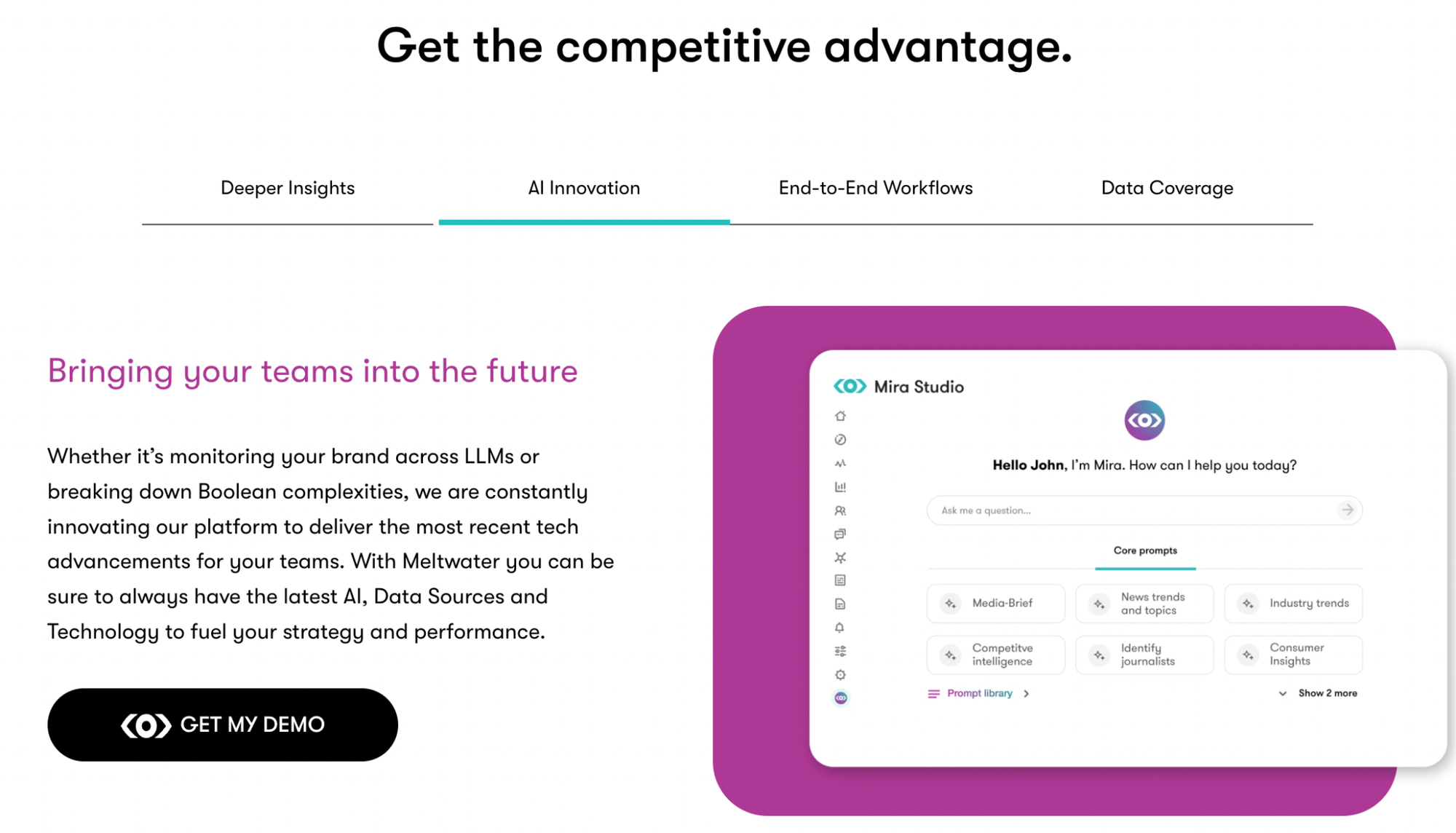 Meltwater's strength is monitoring scale and analytical depth. Third-party research aggregated by Prowly says the platform handles over 1.3 billion documents daily from more than 270,000 global news sources and 15 social media channels, including major Asian platforms. A late 2025 release introduced predictive analytics that estimate whether mention spikes will grow or fade, while GenAI Lens watches how brands appear inside ChatGPT, Gemini and Perplexity. Best fit: enterprise brands that need wide-scale monitoring across international markets with advanced AI analytics.
4. Semrush AI PR Toolkit (formerly Prowly)
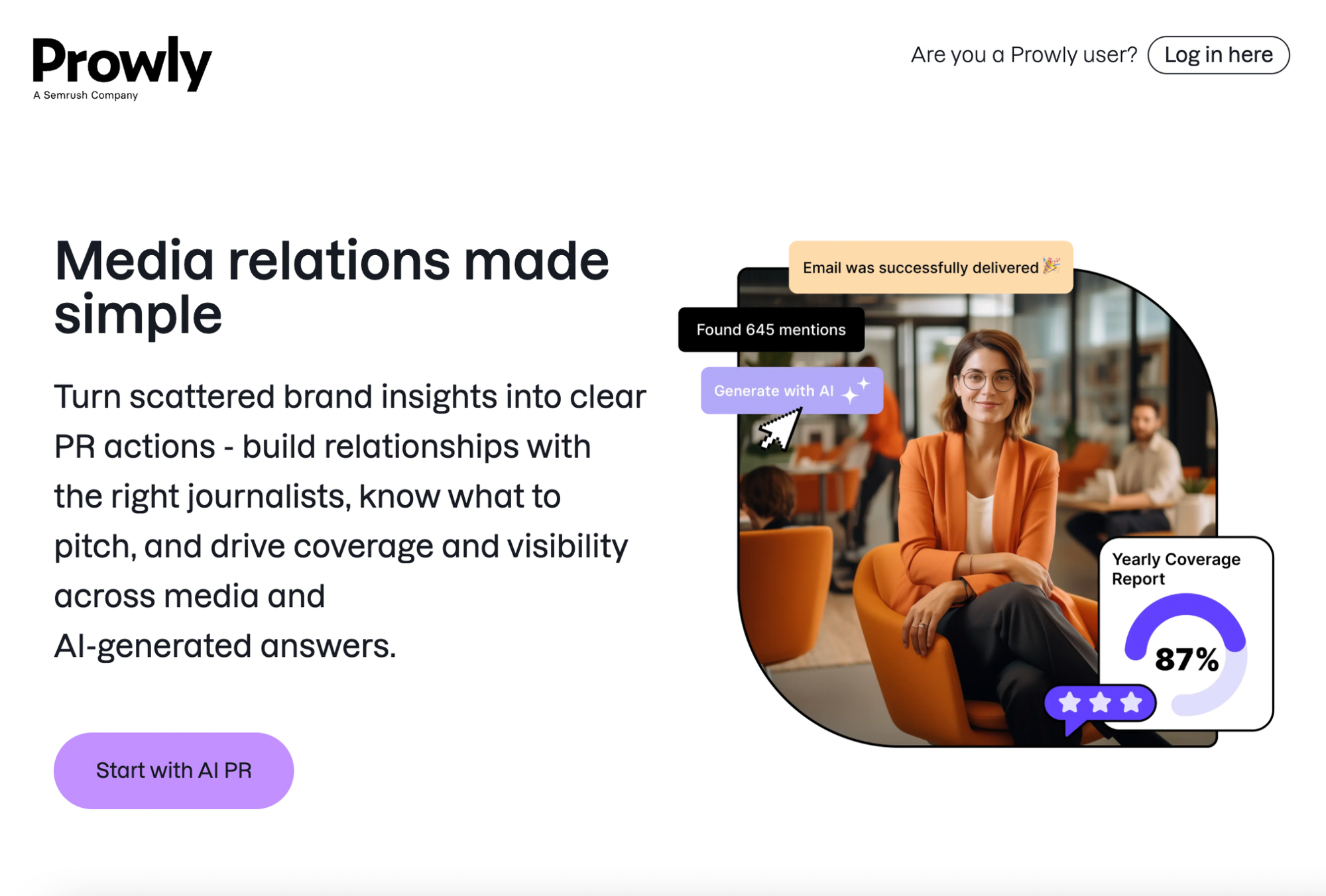 Prowly has become the Semrush AI PR Toolkit, a tiered package for journalist discovery, AI-assisted pitching and earned-media measurement. Semrush AI PR Toolkit (Prowly) includes an AI-cited media finder, a journalist database and outreach tools; older reviews that treat Prowly as a standalone subscription should not be used to judge the current bundle. Semrush's official documentation puts Base at US$149 per month when billed annually for discovery and pitching, Pro at US$279 per month when billed annually adding monitoring, audience insights, follow-ups and advanced analytics, and Business at US$499 per month when billed annually adding competitor media tracking and multi-brand intelligence. These are monthly-equivalent prices under annual billing. Best fit: teams seeking integrated research and outreach, with Pro or Business when monitoring and competitive intelligence are required.
5. Brand24
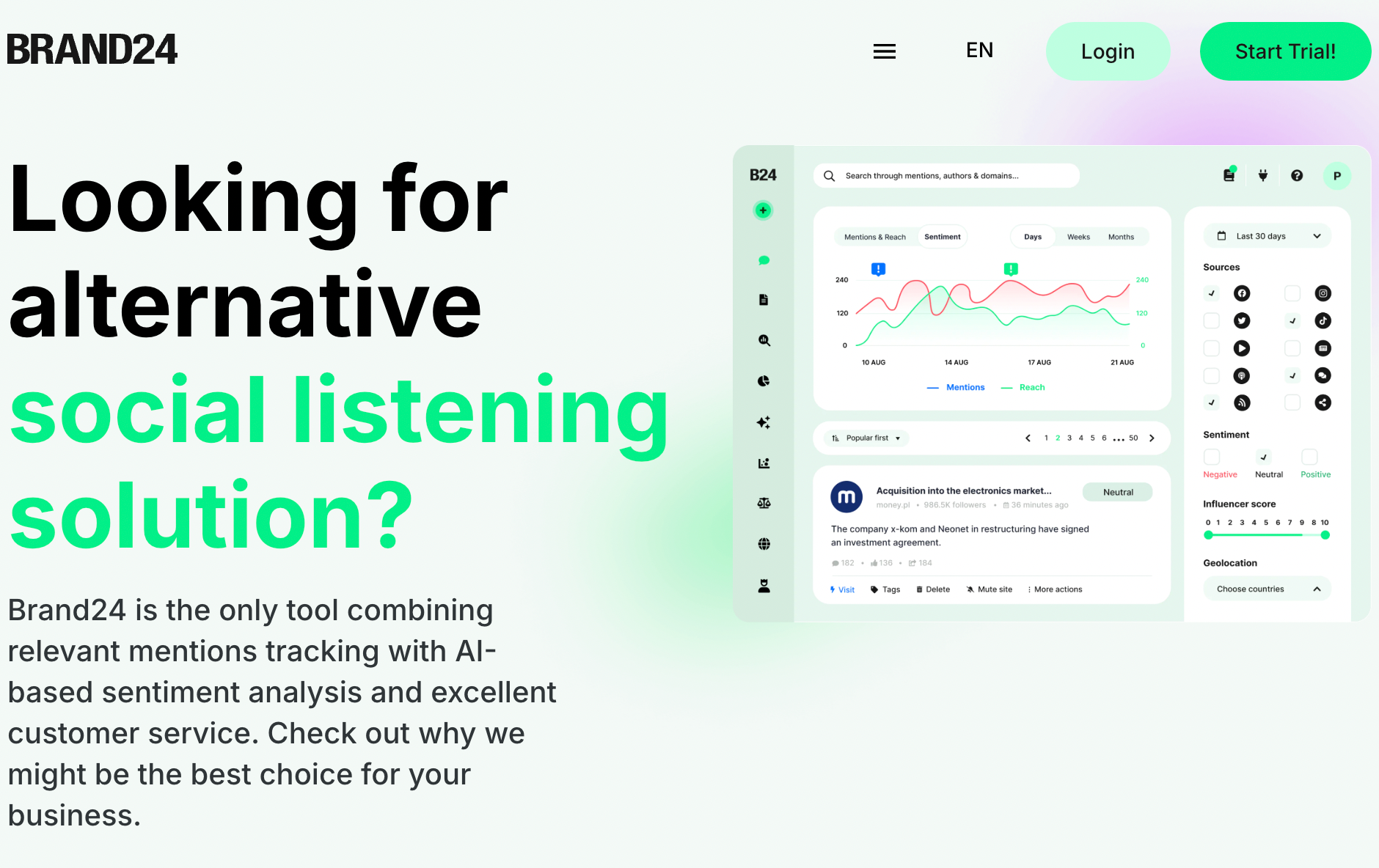 Brand24 tracks public mentions across social and non-social channels in real time, using AI-powered monitoring and an NLP layer that sorts reactions into joy, frustration or anger rather than a simple positive or negative label. Brand Assistant is a ChatGPT-style conversational interface built on a team's own monitoring data, so users can ask about trends and sentiment without manual queries. Best fit: lean PR teams and in-house comms professionals that need real-time monitoring with AI-summarized insights.
6. Signal AI
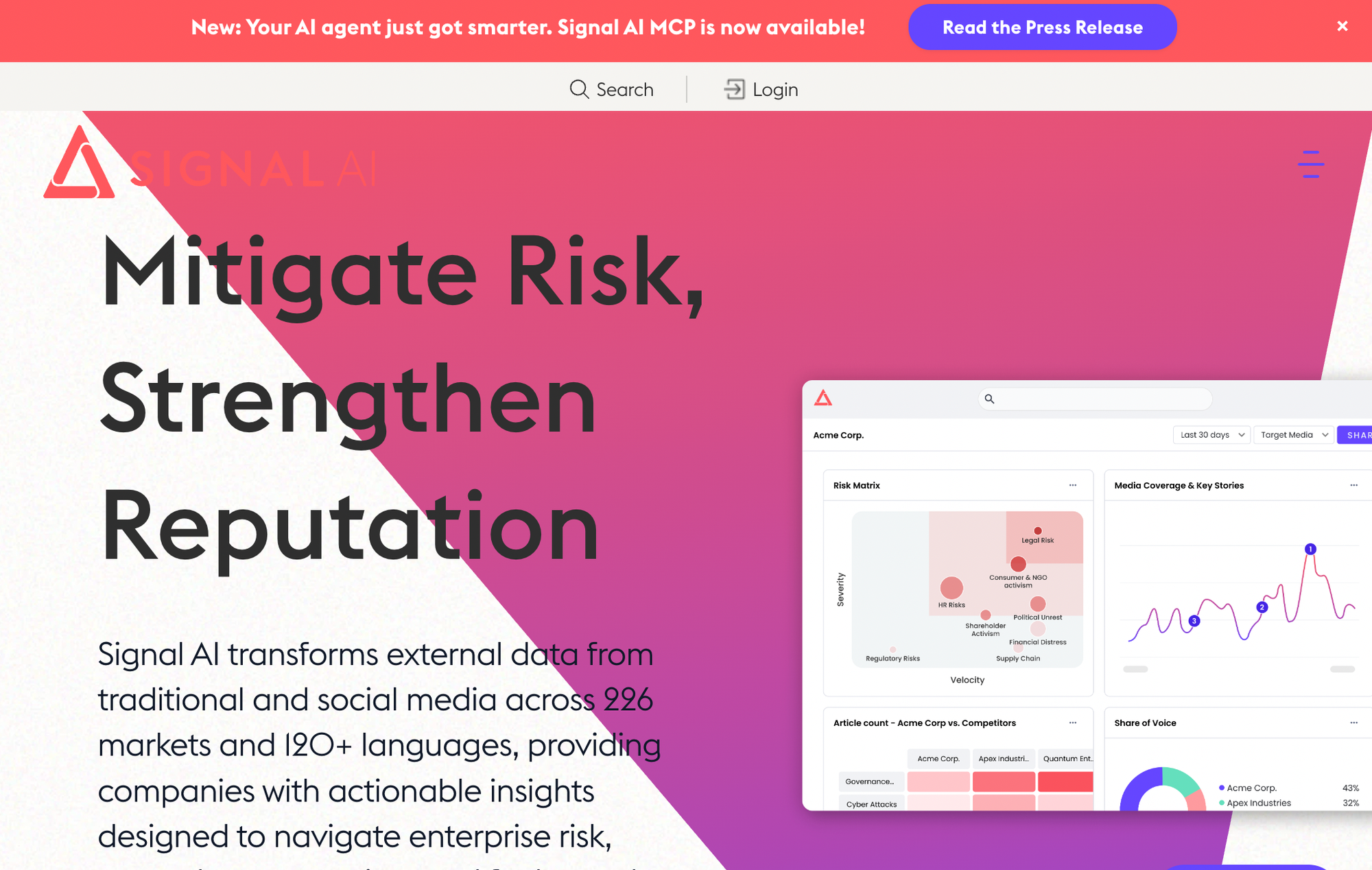 Signal AI presents itself as a media intelligence platform for detecting emerging risks and opportunities before they become headline news. Its models process unstructured data from news, regulatory filings and social content to surface signals conventional monitoring catches too late. The early-warning orientation fits financial services PR, issues management and executive reputation tracking. Best fit: enterprise and financial PR teams that need intelligence on emerging risks, not just tracking of existing coverage.
7. Onclusive
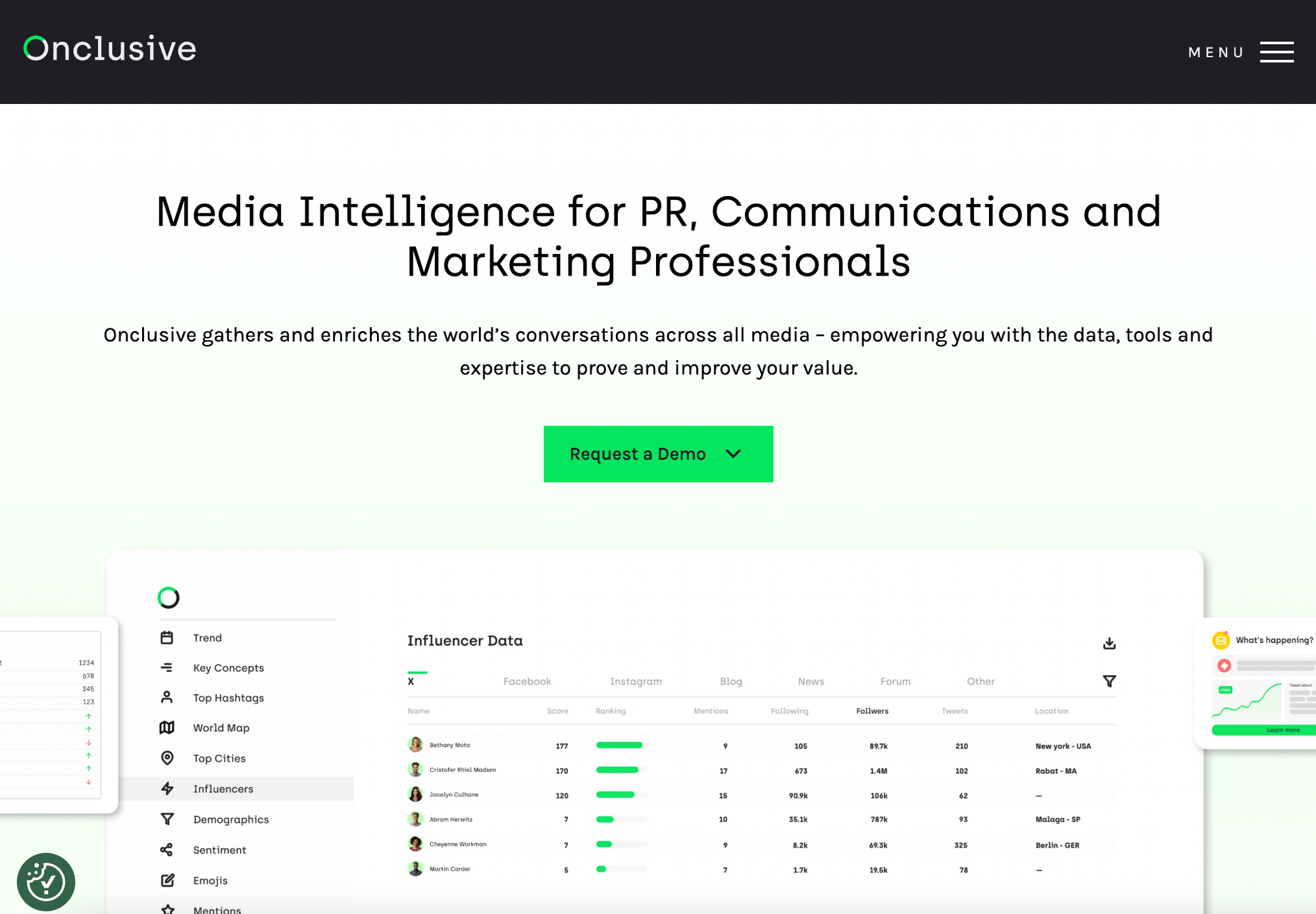 Onclusive, formerly AirPR, focuses on measuring PR outcomes by linking them to business results instead of merely counting clips. Its analytics track earned media performance and connect coverage with downstream measures such as web traffic, leads and conversions, which matters when leadership asks for ROI in marketing-attribution language. Best fit: communications teams reporting to CMOs or CFOs who require business-outcome metrics tied to coverage.
8. Brandwatch
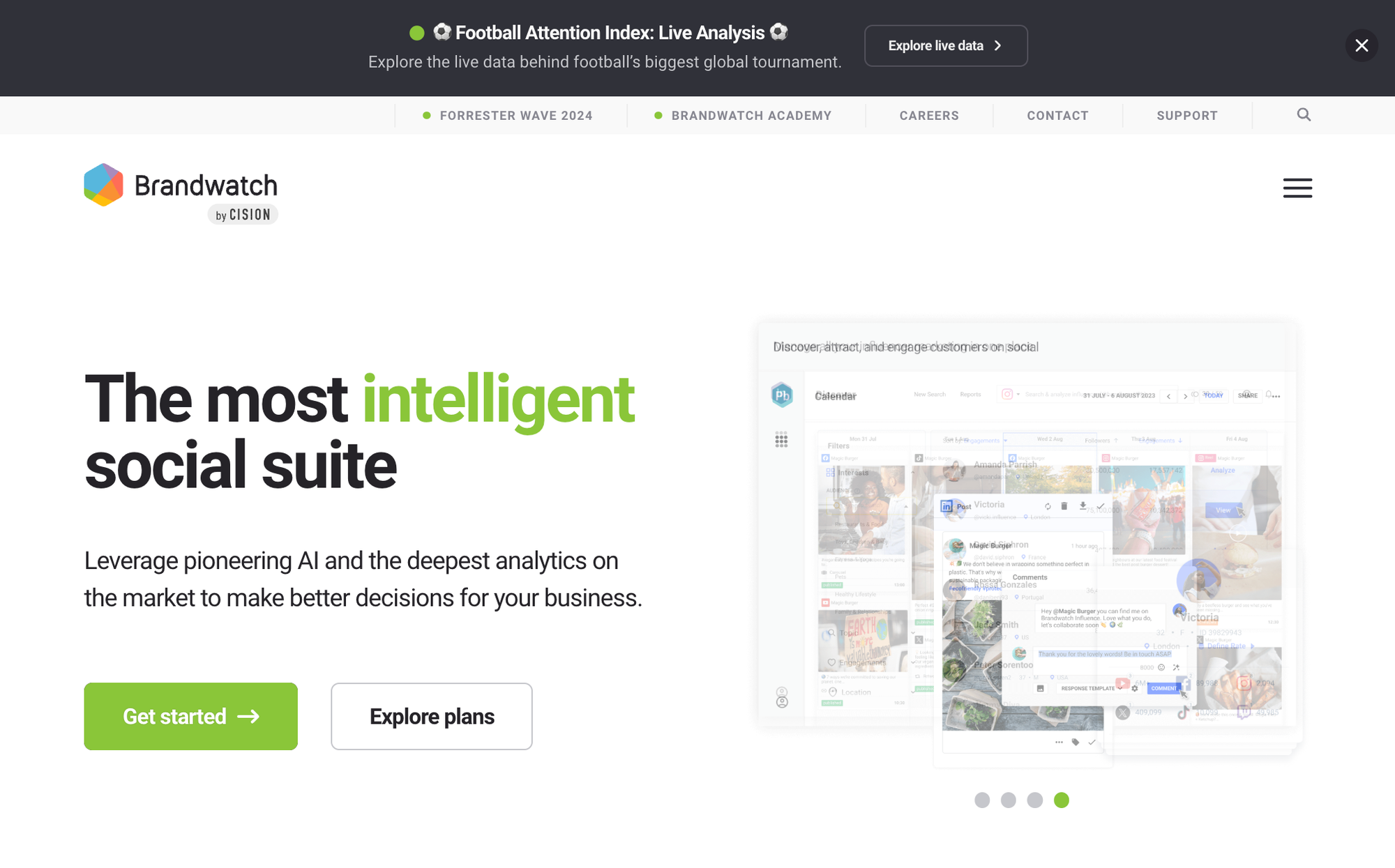 Brandwatch is mainly a social intelligence platform rather than a PR-native tool, yet its AI models process large volumes of social conversation and news to reveal themes, trends and shifts in audience opinion. It delivers the most value when PR and social strategy sit in one team; integrations with Hootsuite and Salesforce connect social intelligence to CRM and campaign management. Best fit: brands where audience sentiment research across social channels is a primary input to campaign planning.
9. Press Ranger
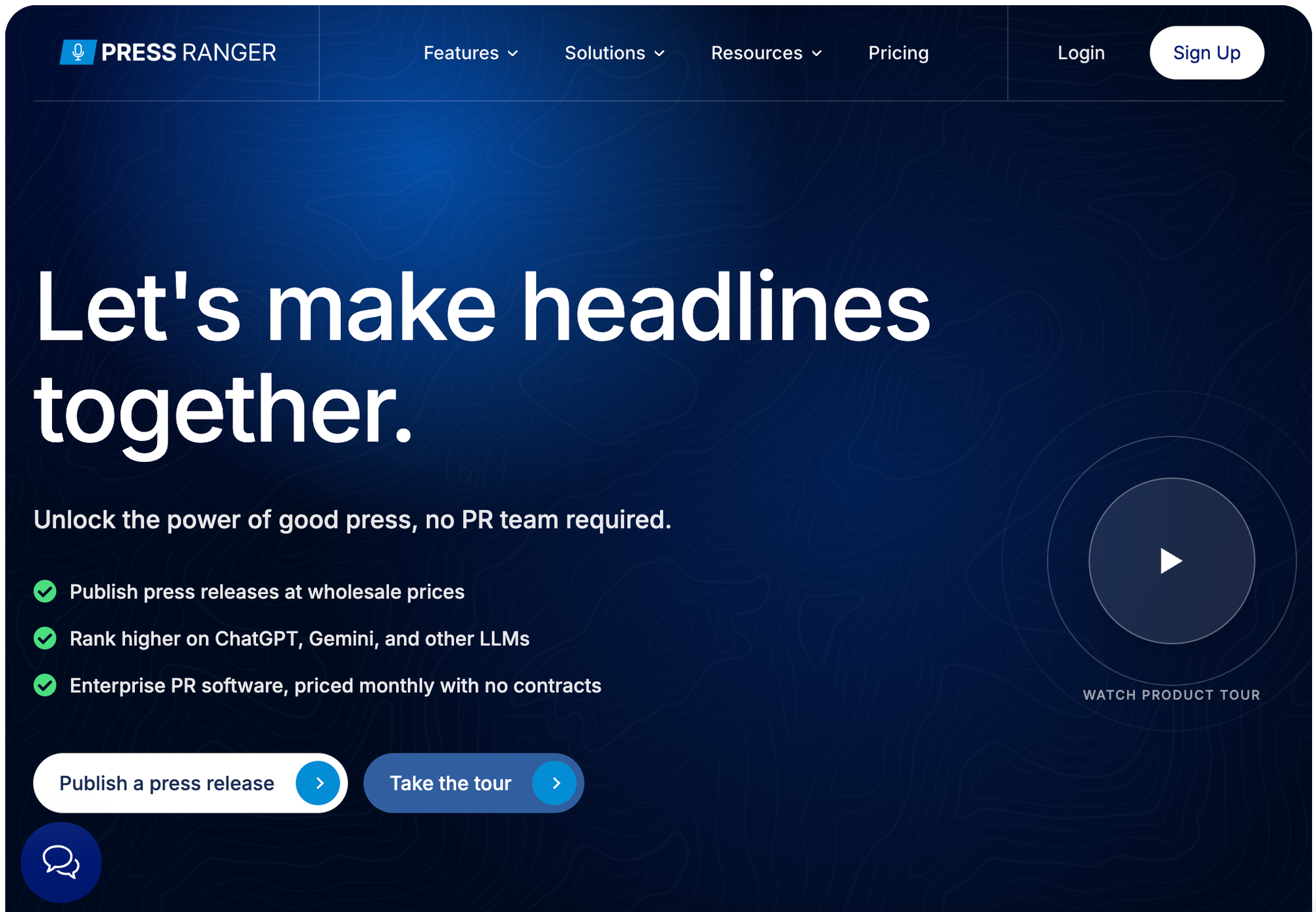 Press Ranger is a narrower tool built around journalist research and outreach. It filters publications, beats and coverage history, then manages outreach in-platform, cutting manual contact research for agencies running high-volume pitching across clients. It favors practicality over breadth and is not a full monitoring or analytics suite. Best fit: teams that run frequent media outreach and need efficient journalist discovery without enterprise overhead.
10. Agility PR Solutions
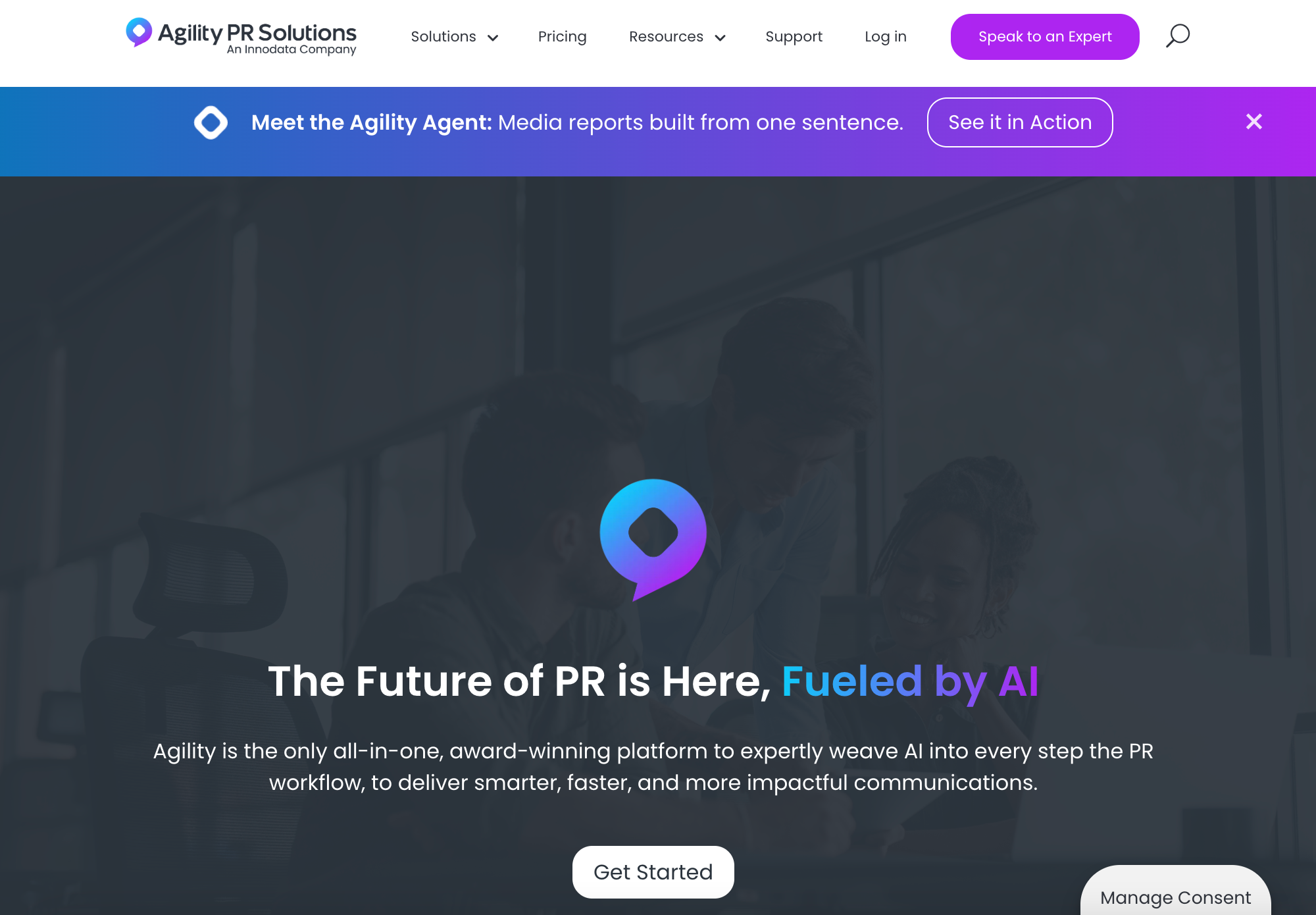 Agility PR Solutions brings outreach, monitoring and analytics into one workflow. Its database covers over 1.1 million journalists and outlets, maintained by an in-house research team rather than automated scraping alone; Influencer Streams surface journalist activity in real time; PR CoPilot handles pitch personalization, subject lines and press release writing. G2 users rate it across media targeting, distribution and PR analytics with over 397 verified reviews. Pricing is custom-quoted. Best fit: mid-market agencies and corporate teams that want a verified database without Cision-level pricing.
11. Goodie
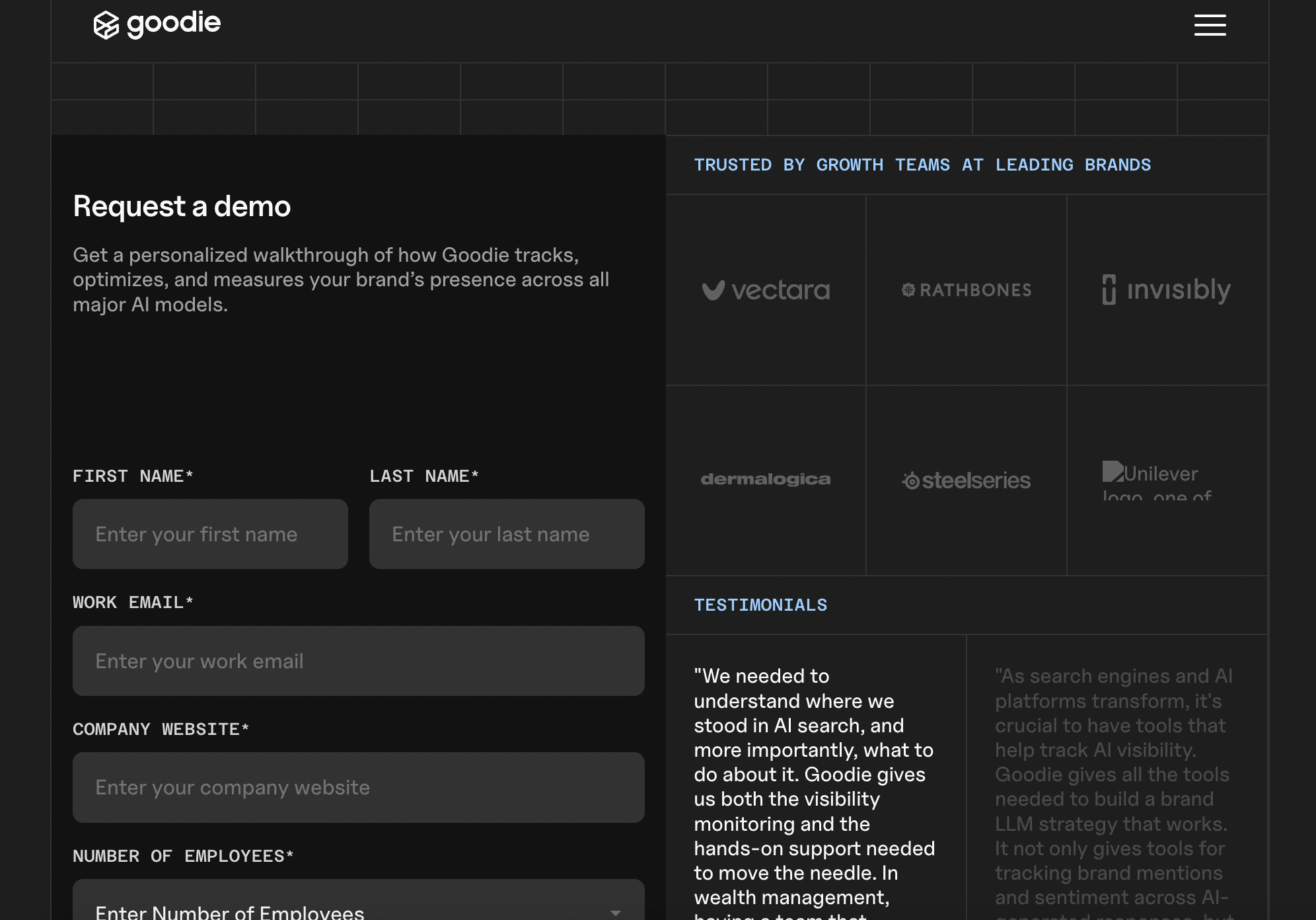 Goodie is not a PR tool in the conventional sense. It is an Answer Engine Optimization platform built to track and improve how brands appear inside AI-generated answers from ChatGPT, Perplexity, Gemini and Claude, with AI visibility monitoring, an optimization hub and an AEO content writer. Teams needing only traditional monitoring will not gain much, but brand discovery increasingly happens inside AI responses. Best fit: B2B brands managing thought leadership or executive visibility in AI-generated answers.
12. Propel PRM
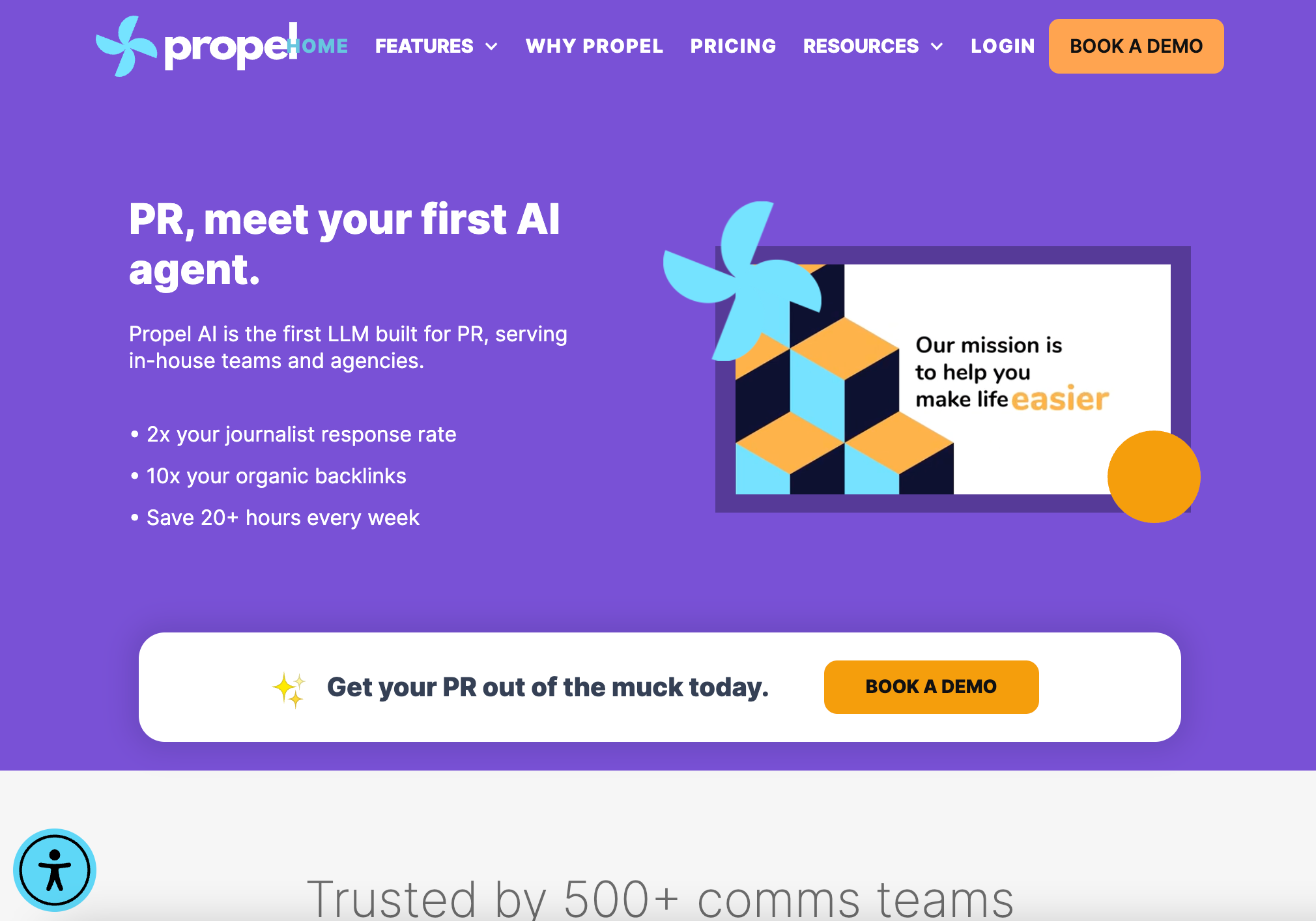 Propel describes itself as the first CRM built specifically for PR, founded in 2019 by a former agency owner. Propel pairs a media database of over one million journalists with Gmail and Outlook integrations that let users pitch from their native email client. Its Artificial Media Intelligence (AMI) layer is trained on a proprietary dataset of over five million pitches and press releases; AMI drafts pitches, suggests relevant journalists and tracks engagement scores. Clients include Microsoft, NPR and Real Chemistry, and Propel 2.0, released early 2024, added deeper AI across the pitch-to-publish workflow. Best fit: agencies that want a CRM-first approach with PR-specific AI training data.
13. Shadow
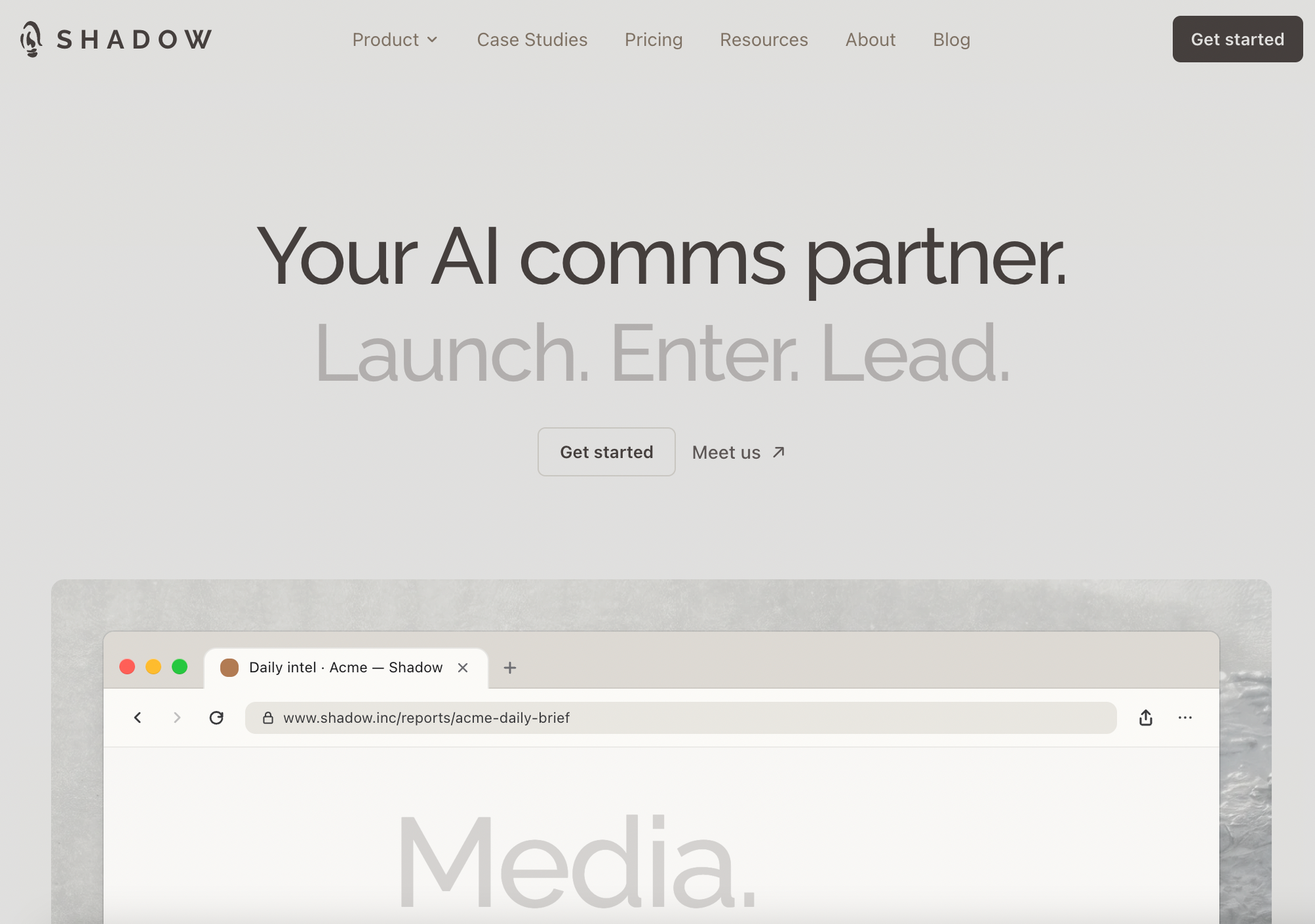 Shadow runs in two modes that should be separated: an AI-native PR agency serving growth-stage tech companies, with clients including OpenAI, Roblox and Amazon, and a platform licensed to other agencies as a replacement for a fragmented stack. The consolidation case rests on PR Council 2025 data cited by Shadow: the average agency runs 8 to 12 disconnected platforms, costing $2,000 to $5,000 per employee per month once licenses and integration overhead are included. Its agents cover research, pitching, monitoring, drafting and reporting in one system. Best fit: agencies consolidating a multi-client tool stack around AI agents.
How should teams choose? A decision checklist
The useful frame is the work your team spends time on, not the length of the feature list.
- When media monitoring and brand intelligence are central, compare Meltwater and Brandwatch for depth.
- When journalist outreach and database access come first, compare Muck Rack and Cision with the Semrush AI PR Toolkit (formerly Prowly); its Base tier focuses on pitching, while monitoring begins with Pro.
- For high-volume pitching on smaller budgets, Press Ranger, Respona and HeyJared are more practical.
- If the goal is to move away from a fragmented stack, Shadow presents a serious case for consolidation.
- For outcome reporting, shortlist Onclusive; for AI answer visibility, Goodie and GenAI Lens.
What do the price bands say about packaging and retention?
The conclusion: vendors are using tiered AI modules to raise contract value while keeping an inexpensive entry point. In SaaS terms, ACV means annual contract value, NRR means net revenue retention, and PLG means product-led growth. The free-to-paid movement in the Muck Rack data is a PLG-style conversion signal, not a sudden surge in experimentation.
| Platform | Quoted anchor | What the tier buys |
|---|---|---|
| Muck Rack | around $10,000 per year | Database, AI pitch guidance, CRM |
| Cision | between $10,000 and $15,000 annually | Mass distribution, CisionOne analytics |
| Semrush AI PR Toolkit | US$149 / US$279 / US$499 per month when billed annually | Pitching, then monitoring, then competitor intelligence |
Independent market commentary puts the wider band at roughly $150–$300 per month for small-team tools and $10,000–$20,000 or more per year for enterprise suites, depending on modules. The practical read for a product owner: if monitoring sits one tier above outreach, expansion revenue and NRR depend on how quickly a new customer needs that second tier. Price the second module before you sign the first.
Where is adoption still thin?
The clearest gap is AI agent use. A report from Muck Rack found that only 12% of PR professionals who use AI are currently using AI agents, even though most know about them. That gap is likely to close over the next 12 to 18 months as platforms push agent-based features beyond beta. Meanwhile the category now ranges from enterprise monitoring suites running for a decade to AI-native platforms that did not exist two years ago, so agent maturity will vary widely by vendor.
What should managers do this quarter? Action checklist
- Write down the one workflow you will pay for: monitoring, outreach or measurement. Do not buy all three on day one.
- Run a two-week test on one real campaign with shortlisted tools; measure reporter response rate and reporting hours saved, not demo polish.
- Check the contract terms behind monthly-equivalent prices: usage limits and annual billing change the real ACV.
- Treat buyer-controlled AI agents as an evaluation criterion, and compare our note on AI agents in creator campaign operations before funding an agent layer.
- Recheck the shortlist after each analyst update rather than treating one ranking as final.
FAQ: AI-first PR software decisions
Is 75% paid AI tool use the same as 76% generative AI use?
No. The 75% figure is paid adoption of at least one AI tool, up from 57%; the 76% figure is overall generative AI use in workflows, little changed from 75% the year before. The paid number is the one that signals budget movement.
Which platform has the lowest documented entry price?
Among these vendors, the Semrush AI PR Toolkit Base tier is listed at US$149 per month when billed annually for media discovery and pitching. Monitoring starts with Pro at US$279 per month when billed annually; Business adds competitor tracking at US$499 per month when billed annually.
Does the 2026 Gartner Magic Quadrant cover AEO tools?
It covers PR and Media Monitoring Tools, evaluating 11 vendors. Answer-engine specialists such as Goodie, and outreach-focused tools such as Press Ranger, fall outside that scope, so use a separate test for those jobs.
Will AI agents replace PR platforms soon?
There is no evidence of that in the 2026 data: only 12% of AI-using PR professionals are using agents. Expect agent features to spread over the next 12 to 18 months, but treat that as a staged capability addition rather than a platform swap.
Sources
- Muck Rack, The State of AI in PR 2026: https://muckrack.com/resources/research/state-of-ai-in-pr
- GlobeNewswire, Muck Rack report release, January 21, 2026: https://www.globenewswire.com/news-release/2026/01/21/3222759/0/en/muck-rack-report-finds-generative-ai-adoption-in-pr-has-leveled-off.html
- PRSA, summary of State of AI in PR 2026 findings: https://www.prsa.org/article/in-brief--majority-of-pr-pros-using-ai-survey-finds--MARCH26
- Gartner, Magic Quadrant for PR and Media Monitoring Tools, October 20, 2026: https://www.gartner.com/en/documents/8527409
- IT Brief Asia, Meltwater ranking coverage: https://itbrief.asia/story/meltwater-tops-gartner-s-first-pr-media-tools-ranking
- pr.co, PR software pricing overview: https://pr.co/blog/top-10-pr-software-for-2026
- Research and Markets, PR tools market forecast (2025 to 2034)
What is the next experiment?
Our next test is deliberately narrow: take one mid-market team, give it Muck Rack's database for beat-accurate pitching and the Semrush AI PR Toolkit Pro tier for monitoring, then measure paid conversion of the second module and reporting hours saved over 30 days. If the second tier pays for itself, the consolidation case for Shadow gets a real comparison rather than a vendor claim.