
SaaS Industry News Case Review: Microsoft’s New Outlook Rewards Push on Windows 11 and the Limits of Incentive-Led Migration
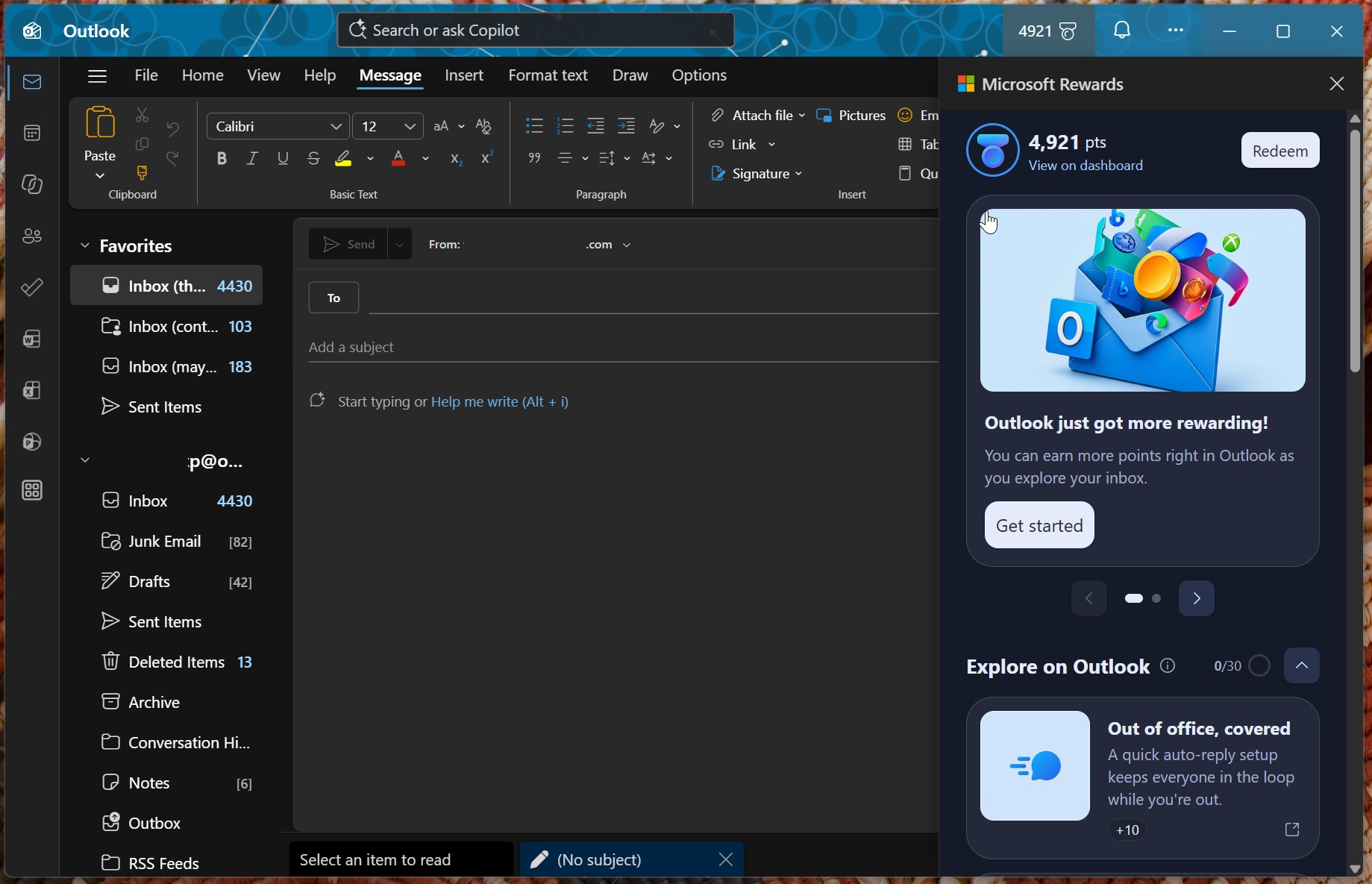
Recently, Microsoft started handing out Microsoft Rewards points inside new Outlook on Windows 11, using a title-bar Rewards icon and short daily tasks to reduce the friction of trying the app. The case shows how a mature platform converts points into behavioural nudges when product-led switching stalls; it also shows why rewards cannot substitute for missing capabilities in classic Outlook, legacy Outlook workflows and enterprise controls.
What happened: a rewards icon becomes a migration nudge inside new Outlook
The short answer: Microsoft is buying user attention, not feature acceptance. According to a report published on 8 November 2026 by Windows Latest, a new Rewards icon appeared in the Outlook title bar for some Windows 11 users. Clicking it opens a small task list; the three activities shown that day could earn up to 30 points, and most were completed by navigation rather than by changing behaviour.
The tasks, as described by Windows Latest and republished by IT之家 on the same day, are instructive because each one maps to a strategic endpoint:
- “Out of office, covered” opened the automatic replies settings page. The task could be marked complete even if the user changed nothing, so the measured action is exposure to a feature, not durable setup.
- “An inbox without the noise” opened a Microsoft 365 subscription pricing page, turning a mail-client task into an upsell surface.
- “Make every day a little smoother” triggered a Bing search for “boost your Outlook efficiency”, rewarding a query rather than an Outlook outcome.
That design matters for anyone reading this as a SaaS news story. In recent years, Microsoft has been steadily positioning new Outlook as the default Windows mail experience, built on web technology that it shares with Outlook on the web. The company has previously used prominent switching buttons, automatic installation of new Outlook and repeated upgrade prompts. This reward campaign is the next step in that sequence: when interface nudges do not deliver adoption fast enough, Microsoft is attaching points to the attempt itself.
Why points: what Microsoft is really buying with Microsoft Rewards
Microsoft Rewards is a low-cost engagement instrument, not a subsidy large enough to change switching economics. The Microsoft Rewards programme page shows that gift cards can be redeemed from 1,600 points. At that threshold, a daily maximum of 30 points represents roughly 1.9% of one minimum gift-card redemption — our own analysis, based on publicly listed point values rather than a Microsoft-quoted conversion rate.
For consumers, that is a nudge. For Microsoft, the valuable output is behavioural data and funnel movement: more first-run sessions in new Outlook, more visits to Microsoft 365 pricing, more Bing searches, and a larger feedback pool for features that must be polished before the enterprise transition. In the same period, Microsoft reported that Microsoft 365 consumer subscriptions grew 7% year over year to more than 90 million during FY26 Q1. The Outlook reward task that opens a Microsoft 365 pricing page is therefore sitting next to a genuinely large subscriber base, not an untested consumer market.
Classic Outlook remains the reason the push is still difficult. Many enterprise users and veteran power users still depend on it for add-in compatibility, offline handling, local mailbox control, advanced message rules and specialised workflows. Those are switching costs that points do not offset. Microsoft’s own consumer Outlook guidance also states that ad-free Outlook is tied to a Microsoft 365 subscription, while a free, ad-supported version exists for users without paid Microsoft 365. In other words, a reward that draws a user toward new Outlook can simultaneously expose a second complaint: the experience that feels most “new” may also feel most commercially managed.
How this case compares with earlier Microsoft migration campaigns
A more interesting reading of the case is that Microsoft has been testing this playbook before, and the Windows 10 migration provides the closest parallel.
Before Windows 10 support ended on 14 October 2025, Microsoft offered consumers several routes to Extended Security Updates. One route, reported by BleepingComputer on 24 June 2025, was to redeem 1,000 Microsoft Rewards points. That was a materially different incentive from 30 Outlook points: here, points were converted into a security outcome. The same programme remains relevant because the Windows 10 ESU portal notes that enrollment can continue until 12 October 2027, meaning points are still a bridge for users who cannot or will not move yet.
Earlier still, as far back as 2016, Microsoft was already using Microsoft Rewards to steer Windows 10 behaviour, including Bing searches and browser-related actions tied to Edge adoption. The Outlook task that opens a Bing search page is therefore not a one-off experiment; it is part of a longer pattern where Microsoft rewards are used to make a migration feel cheaper at the moment of choice.
The enterprise timeline, however, is slower and more governed than the consumer campaign suggests. Microsoft’s migration documentation describes an opt-out stage, in which new Outlook may become the default but users and admins can still revert, followed by a cutover stage where reverting to classic Outlook is no longer possible. In a February 2026 update to Microsoft 365 Message Center post MC949965, cited by Directions on Microsoft on 11 March 2026, Microsoft said: “The opt-out phase for Enterprise environments will now begin in March 2027 (previously April 2026), providing organizations with 12 months of lead time to prepare.” The same post also said organizations are receiving “at least 12 months’ notice” before cutover, while Microsoft’s lifecycle guidance states that existing classic Outlook installations under perpetual and subscription licences will continue to be supported until at least 2029.
That governance layer is where the comparison with other forced migrations becomes useful. SaaS buyers should read this case alongside the forced migrations pattern now common across AI and productivity suites: vendors increasingly separate the consumer “try it” phase from the enterprise “can you safely standardise on it” phase. In the Windows case, the gap between those phases is measured in years, not weeks.
What the case reveals about feature parity, not incentives
The reward campaign is best understood as a signal that Microsoft is still closing functional gaps around new Outlook, not that users suddenly find it superior. Two recent developments illustrate the real drivers of migration.
| Mechanism | Timepoint | What it changes | What it does not solve |
|---|---|---|---|
| Microsoft Rewards tasks inside new Outlook on Windows 11 | 8 November 2026 | Encourages first-run sessions, feature discovery, pricing-page traffic | Advanced add-ins, legacy Outlook workflows, offline depth, enterprise admin confidence |
| Planner integration in new Outlook | Rolling out from August 2026, reported by Windows Latest and IT之家 | Reduces context switching by bringing tasks into mail, calendar and Copilot surfaces | Does not make classic Outlook users switch if their core requirements remain unmet |
| Faster classic Outlook search using Windows Search | November 2026, reported alongside the Rewards story | Shows Microsoft is still investing in the old client’s practical weaknesses | Signals that classic Outlook remains operationally important long after the promotional campaign begins |
There is also a strategic contradiction worth naming. Microsoft says its future lies in new Outlook, yet it continues to improve classic Outlook in ways that matter to the same users it wants to move. Windows Latest reported that Microsoft is developing faster search for classic Outlook, allowing the older client to call on Windows Search and retrieve results locally when connectivity is poor. That is not a throwaway detail. For many organisations, search quality is not a cosmetic concern; it is a trust signal.
What managers should take from this case
If you are reading this as a SaaS operator, product lead or buyer, the lesson is not “points increase adoption”. It is that incentives work only where the product gap is small. Microsoft’s Rewards campaign is most useful as an early-warning indicator: when a platform vendor needs to attach points to a first run, the default path is still being defended by habits, compatibility and distrust rather than by clear superiority.
For CEO and growth leaders, the case reinforces a simple segmentation rule: consumers can often be nudged into trial with small rewards, but business users migrate when risk is removed, not when points are offered.
For IT and procurement decision-makers, the most practical response is to treat new Outlook and classic Outlook as two procurement tracks with different clocks:
- Inventory the workflows that still depend on classic Outlook, especially add-ins, local mailbox management, offline behaviour, public-folder-adjacent use, and heavy rule sets.
- Test new Outlook in a ring, not by clicking reward tasks, and record where it fails on native integration, performance and ad visibility for non-Microsoft 365 users.
- Track the enterprise migration stages against Microsoft’s published opt-out and cutover model, using the March 2027 opt-out reference date and the “at least 2029” support statement for classic Outlook as planning anchors, not as marketing copy.
For product managers, the reusable pattern is that migration campaigns need three layers to succeed:
- A friction reducer — in this case, points, default toggles and easier first-run prompts.
- A capability bridge — in this case, Planner inside mail, faster search, tighter Microsoft 365 integration.
- A credible fallback — in this case, the opt-out period that lets users and admins return to classic Outlook while features mature.
The same three-layer framework is useful beyond Microsoft. In over the coming period, more enterprise software teams will face users who are not resisting novelty but resisting lost certainty. The answer is not better rewards. It is better evidence that the new default will not break the work that matters most.
FAQ: what this Outlook Rewards case means in practice
1. Is this news mainly about consumer marketing or enterprise migration?
Both, but at different speeds. The Rewards push is a consumer-facing behavioural nudge on Windows 11. The enterprise migration is governed by staged rollout, admin policy and a later opt-out/cutover path toward new Outlook.
2. Why are points being offered if new Outlook is meant to become the default?
Because defaults alone have not delivered sufficient voluntary trial or feedback volume. Microsoft is using points to increase engagement signals, expand the data it can collect, and move users closer to Microsoft 365 and Bing touchpoints.
3. Does this mean classic Outlook is going away immediately?
No. Microsoft’s published migration and lifecycle materials still describe classic Outlook installations as supported until at least 2029, while the enterprise opt-out stage has been referenced as beginning in March 2027 rather than April 2026.
4. Should users care if the reward tasks are barely active?
Yes, because the task design is the story. Opening a settings page, a pricing page or a Bing search page does not prove suitability for real mail workflows. It proves that Microsoft is measuring attention, not outcome quality.
5. What is the single best signal to watch next?
Feature-parity updates on the new platform, especially around offline behaviour, add-ins, local data handling and enterprise controls. Those determine whether the campaign is accelerating adoption or merely postponing harder decisions.
Reference sources
- Windows Latest, 8 November 2026 — Rewards icon and task details in new Outlook on Windows 11
- IT之家, 8 November 2026 — Republished detail on the three Rewards activities and classic Outlook search work
- Microsoft Learn — Stages of migration to new Outlook for Windows; classic Outlook supported until at least 2029
- Directions on Microsoft, 11 March 2026 — Quote from Microsoft 365 Message Center post MC949965 on the March 2027 opt-out date
- Microsoft, FY26 Q1 earnings call page — Microsoft 365 consumer subscriptions grew 7% to more than 90 million
- Microsoft Rewards About page — Gift-card redemption begins from 1,600 points
- BleepingComputer, 24 June 2025 — Windows 10 ESU could be obtained by redeeming 1,000 Microsoft Rewards points
- Microsoft Support — Windows 10 support ended 14 October 2025 and ESU enrollment window referenced through 12 October 2027
- Microsoft Support — Ad-free Outlook is tied to a Microsoft 365 subscription
- Outlook for Windows product page — Free, ad-supported experience for users without Microsoft 365
- IT之家, 7 August 2026 via Sina Finance — Planner integration began rolling into new Outlook in August 2026