
Anthropic Claude Personal Finance Case Review: What the Read-Only Bank Beta Means for SaaS Operators
Anthropic is bringing Claude into personal finance by letting users connect bank and credit-card accounts through Plaid. The beta, rolling out this week in the United States for Claude Pro, Max and Ultra subscribers, is read-only, ad-free and positioned as an analysis layer rather than a money-management tool. The case shows how AI products can enter sensitive domains with narrow data rights.
What happened in the Claude Personal Finance case?
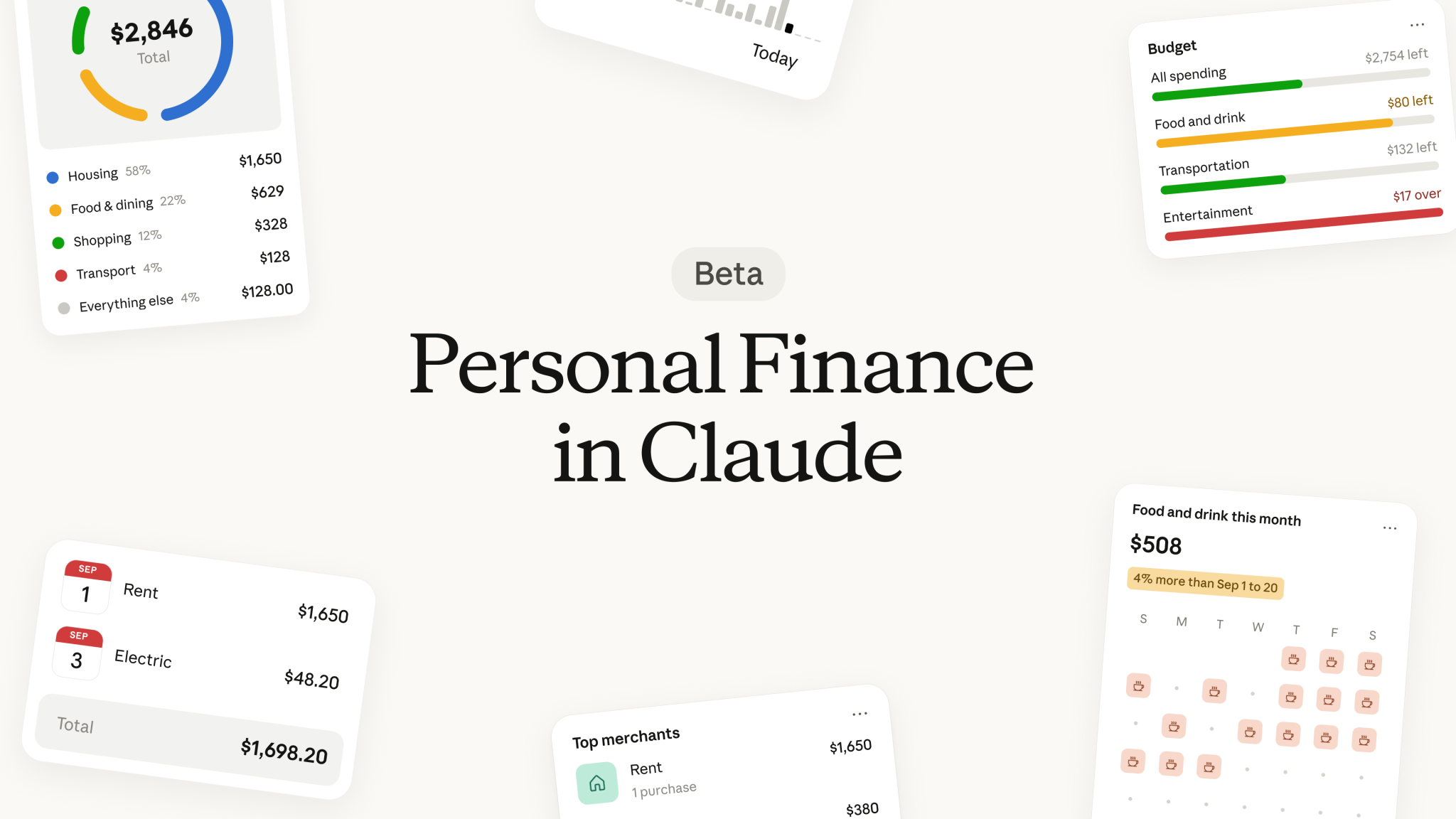
Anthropic announced that Claude added Personal Finance, turning the assistant into a user-context finance helper. After authorization through Plaid, Claude can review connected financial information and answer questions about spending, budgeting and account health. The product boundary is explicit: the connection is read-only, so it cannot transfer money, manage funds, make investments or carry out transactions. That decision lets Anthropic offer a useful AI experience while staying out of payments and regulated execution.
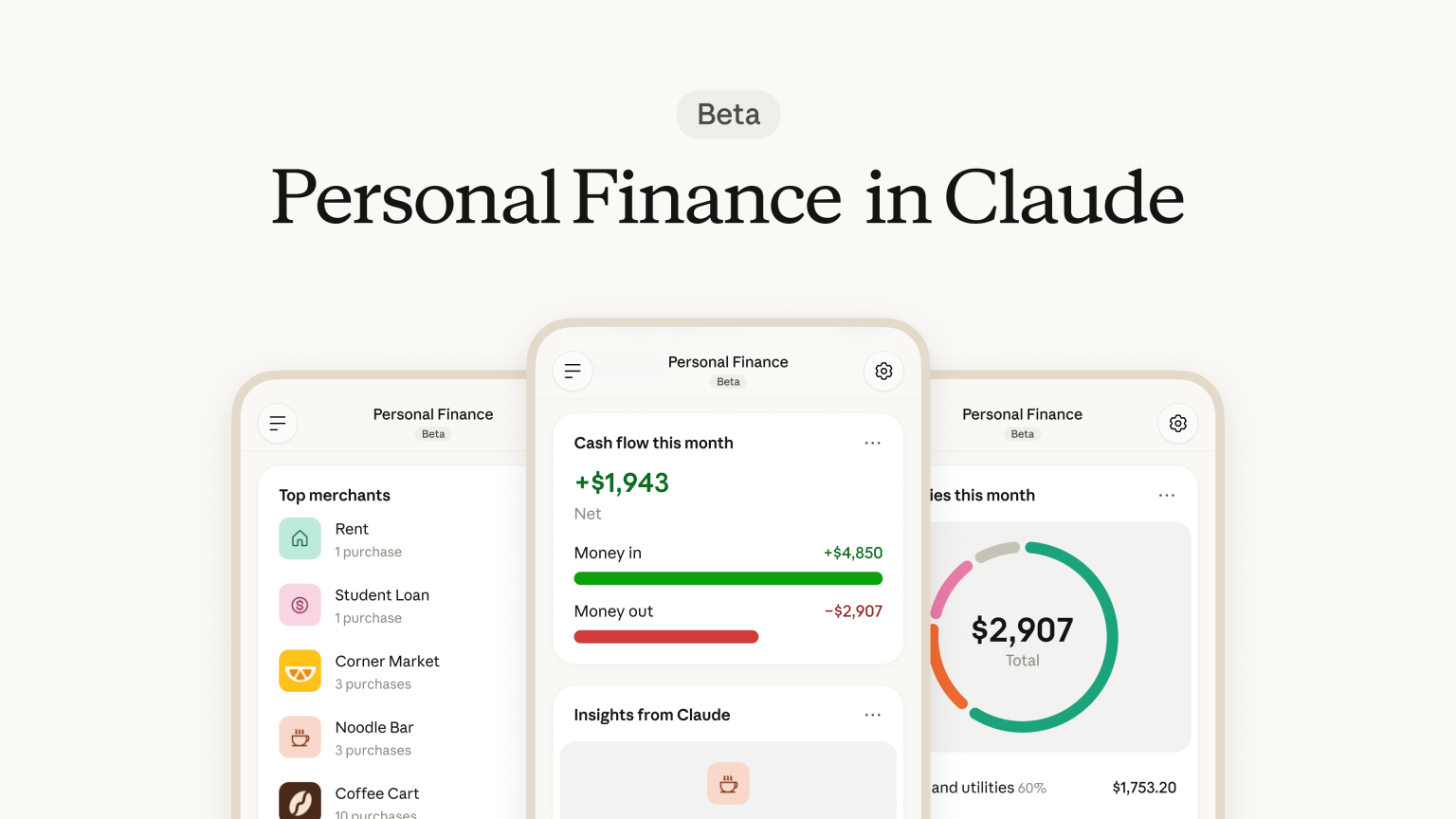
The interaction pattern matters as much as the feature name. At month-end, a user can ask, "Where did my money go this month?". Claude aggregates transactions from connected accounts and sorts them into rent, utilities, dining, shopping and other categories. The user can continue with, "Is that higher than my usual level?" or "What other expenses deserve attention?". The tool can also answer broader questions such as, "Is my spending exceeding my income?". These prompts convert raw data into a conversational audit.
Reuters reported that the rollout is beta for paid subscribers this week and that users can link bank and card accounts through Plaid to ask about balances, spending and bills. That external reporting confirms the central product shape: account-grounded Q&A, not autonomous banking.
Why did Anthropic limit the data it can access?
The permission design is the most reusable part of the case. Claude can access the bank name, account name and account type, the account's last four digits, balance, credit limit and up to two years of transaction history. It does not obtain full account numbers, and the authorization flow is intended to keep bank passwords away from Claude. In effect, Anthropic is asking for the smallest dataset that still supports meaningful insight.
The risk-control checklist inside the product
- Read-only access: Claude sees data but cannot move it.
- Time-bound history: access is limited to up to two years.
- Field-level limits: no full account numbers.
- Connector-based authentication: Plaid mediates the account connection.
- Training-data carve-out: conversations inside the Personal Finance area are not used to train AI models.
- Commercial neutrality: no ads or sponsored recommendations, and the feature does not sell credit cards, loans or savings accounts.
For SaaS teams, this is a template. The safest path into sensitive data is usually: connect, analyze, recommend, and stop before execution. The carve-out on model training is especially important. It gives Anthropic a privacy argument, but it also creates a product limitation: the most valuable financial conversations do not become free training fuel.
What can product leaders learn from the user workflow?
The workflow teaches three lessons: personalization requires real data, explainability requires natural language, and trust requires visible boundaries. Claude can explain account balances, transaction records and financial jargon to users without a finance background. It can also turn terms into personal numbers. For example, a user can ask about annual percentage rate (APR), receive a plain explanation, then ask Claude to estimate the interest paid over the past year from their own records.
The feature also demonstrates how generative AI can create a lightweight financial-dashboard layer without building a full fintech interface. Users can ask Claude to summarize spending categories, identify duplicate charges, spot unexpected fees, detect rising recurring bills and compare current behavior with their own baseline. This is not only convenience; it changes user expectations. If a subscription assistant can answer account-level questions, standalone budgeting apps will need sharper insights, integrations or workflow advantages.
How does the OpenAI comparison change the competitive read?
Anthropic is not the first AI company to enter this space. OpenAI introduced a similar personal-finance capability in ChatGPT in May this year, allowing users to connect financial accounts and ask about spending habits, budget status and longer-term planning. OpenAI's product page later described the experience as a preview launched on May 15, 2026 for U.S. Pro users, then updated on June 25, 2026 to say it was available to Plus and Pro users in the United States across web, iOS and Android. The comparison gives managers two signals: the window to launch account-grounded AI features is open, and distribution strength inside an existing assistant can compress adoption cycles.
Case snapshot
| Dimension | Anthropic Claude Personal Finance | OpenAI ChatGPT finance experience |
|---|---|---|
| Market entry | United States beta this week | United States preview in May this year |
| Eligible users mentioned | Claude Pro, Max and Ultra | Started with U.S. Pro users, later expanded to Plus and Pro users |
| Primary value | Ask questions about balances, spending and account health | Ask questions about spending, budgeting and long-term planning |
| Account access | Read-only through Plaid | Connected financial accounts; no independent investment execution positioning |
| Strategic lesson | Narrow permission model may unlock sensitive personal data | Assistant distribution can rapidly move financial AI into the mainstream |
Table note: the OpenAI expansion dates are reported by OpenAI's product update; the Anthropic rollout description is supported by Reuters reporting and the product facts presented here. The table is an analytical comparison, not a claim that either company offers licensed investment advisory services.
What risks should SaaS managers watch in this case?
The case is useful because its risks are just as instructive as its features. First, accuracy risk. A model that can explain APR and calculate personal interest may still misread merchant names, duplicated entries or subscription renewals. The product should encourage verification before users make decisions such as cancelling services, renegotiating bills or reallocating savings.
Second, privacy-perception risk. "Read-only" is easier to communicate than "we can see your entire spending pattern for up to two years." Even with limited fields, the inference surface is broad: spending can reveal travel habits, medical visits, relationship patterns and financial stress. Managers should not treat data minimization as a one-time technical decision; it needs user-facing controls.
Third, regulatory and trust risk. Anthropic's public framing, as reported by The Verge, says Personal Finance is a first step and that bigger money decisions are best served by working alongside licensed professionals and regulated firms. That wording is a useful reminder: AI assistants can provide information and pattern recognition, but crossing into regulated advice or execution changes obligations and liability.
What actions should SaaS decision-makers take?
For product teams, the Anthropic case suggests a practical launch sequence for high-trust verticals:
- Map the minimum data fields needed to answer one high-value question.
- Use a vetted connector rather than handling credentials directly.
- Launch read-only before adding workflow actions.
- Train users with real prompts, such as month-end spending review and duplicate-charge detection.
- Separate sensitive workflows from normal training-data policies.
- Build a verification layer for risky outputs.
For executives, the lesson is to ask which customer decisions are delayed by fragmented data. Anthropic's move implies that large language models can become an explanation engine for financial records, customer-support tickets, sales pipelines or compliance logs. If your product already owns user data, the next differentiator may be conversational interpretation. If your product does not own the data, the risk is becoming invisible behind a general assistant.
Frequently asked questions
Is Claude Personal Finance a bank-transfer tool?
No. The product is read-only. Claude can analyze connected account data, but it cannot move money, execute transfers, manage funds or invest capital.
What data does Claude access from connected accounts?
The stated access includes bank name, account name, account type, the last four digits, balance, credit limit and up to two years of transaction history. Full account numbers are not included, and the authorization flow is designed to keep bank passwords out of Claude's view.
Are the conversations used to train Anthropic's models?
Anthropic says conversations inside the Personal Finance area are not used to train AI models. Outside that area, normal privacy settings would apply, so the product's design creates a clearer boundary for sensitive queries.
Why does the Plaid integration matter?
Plaid acts as the account-connection layer between Claude and users' financial institutions. For managers, the lesson is that a connector can simplify authentication, reduce credential handling and make read-only permissions easier to govern.
Which users can access the beta now?
The rollout is for users in the United States with Claude Pro, Max and Ultra subscriptions, and it is being made available this week as a beta.
References
- Reuters, "Anthropic rolls out personal finance feature for Claude", https://www.reuters.com/business/anthropic-rolls-out-personal-finance-feature-claude-2026-11-05/
- Plaid, "Plaid Powers Financial Insights In Claude", https://plaid.com/blog/plaid-anthropic-financial-insights-in-claude/
- OpenAI, "A new personal finance experience in ChatGPT", https://openai.com/index/personal-finance-chatgpt/
- The Verge, "Claude AI can plug directly into your bank account", https://www.theverge.com/ai-artificial-intelligence/1027652/anthropic-claude-plaid-personal-finance