
GlobalSaaSManager BuyerGuides: How to Verify Martech Feature Readiness in Five Checks Before You Sign
The default answer is no: a launch announcement should not decide a martech budget — buyer-side feature readiness should, because only capabilities a named team can reach under real conditions justify committed spend. Readiness means a specific user, in a specific market, with specific permissions and clean data, can produce an agreed output today. The dilemma is familiar: the demo works, the invoice is due, and the honest answer sits between "ship it" and "wait".
Marketing stacks now bundle AI agents, automated media buying and fresh creative models. One announcement can compress four states — what customers can use now, what developers can call, what a few pilots may test, and what everyone else might receive later. Collapsing those states into one release date hides the cost of waiting. GlobalSaaSManager BuyerGuides treats that blend as a procurement problem, not a communications problem.
What does "feature readiness" mean for a buyer?
Conclusion first: a capability is ready only when a named account, in a named market, using its own permissions and data, can produce an agreed output. Vendor interest is not readiness, and a working sandbox is not a production workflow.
The term describes reachability plus proof. A platform may expose the right APIs and integrations, yet turning those into a repeatable process typically demands engineering time for integration, customization and ongoing maintenance. If the internal team has no spare capacity, the feature exists on paper while the workflow stays theoretical. Readiness also hinges on technical resources, which is why our checks include an owner for every dependency.
What did this October's announcements actually deliver?
Conclusion first: each launch moved a different needle, and none of the four can be priced as a single "live" product.
Netflix made the cost of delay unusually explicit this October. In a shareholder letter dated October 20, the streaming company lowered its full-year advertising revenue outlook from roughly US$3 billion to about US$2.7 billion, pointing to advertising product capabilities that rolled out more slowly than anticipated.
US$2.7 billion is Netflix's revised 2026 advertising revenue outlook, measured against an earlier forecast of approximately US$3 billion — a change of forecast, not a reported revenue loss.
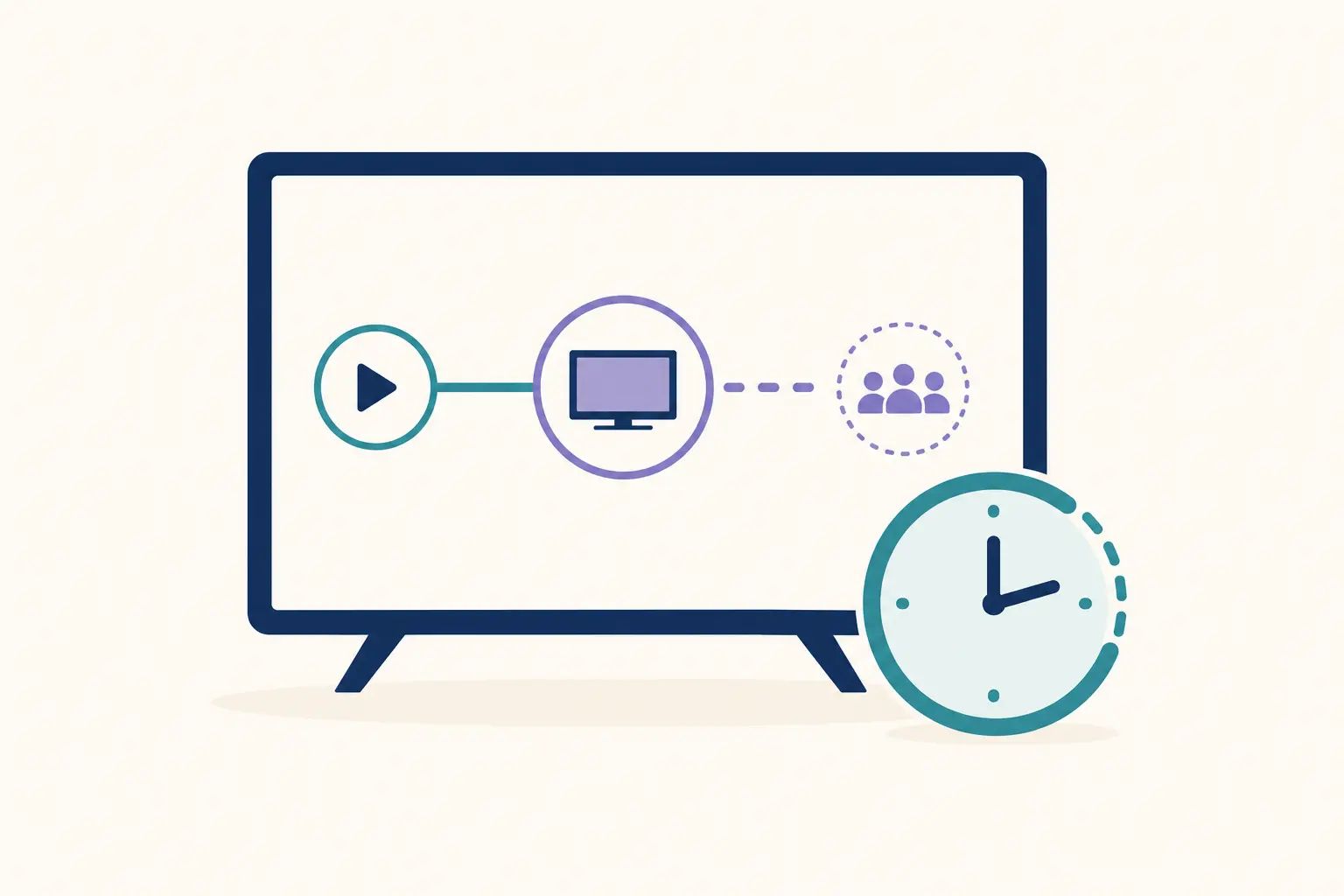
Netflix trims its 2026 advertising outlook to $2.7B as some product capabilities roll out late. (Image: ContentGrip)
The disclosure does not say advertisers are leaving, nor does it name every delayed feature. It does show that access to a media product's capabilities can reshape the commercial plan built around that product. Alongside the revision, Netflix described broader connected-TV programmatic availability, continued measurement work and a planned expansion of its advertising tier. A buyer still has to confirm which of those tools work in its own market and demand-side platform.
How do the four launches differ on access, timing and proof?
Canva's Craft announcement on October 22 named distinct access paths: an image-generation model available in Dream Lab and through a public API, with Model Context Protocol (MCP) support described as coming soon and faster model variants likewise forthcoming. A creative team can generate and edit images inside its existing Canva workflow today; a developer can build on the current API. An agent-based design workflow over MCP belongs to the direction of travel, not to the same usable surface.
Walmart drew a different line. On October 21 the retailer presented Agent Profiles and an Agent Gateway — separate profiles meant to identify authorized shopping agents while letting customers view transactions, set limits and revoke access. Profiles are described as launching next month, while the gateway for external developers heads toward an invitation-only beta. For a commerce team weighing AI-driven purchasing, that is an argument for labeling dependencies accurately, not for dismissing the idea. Retailers' data-access controls, account permissions and approval flows are part of the product itself.

Walmart is building agent profiles, shopping permissions and a gateway for AI agents. (Image: ContentGrip)
Demandbase, meanwhile, introduced AEO, Campaign and Audience agents in an October 20 announcement spanning AI search visibility, campaign execution and audience intelligence. Those are claims worth investigating. The release alone cannot tell one buyer whether its subscription tier, sales-data configuration and regional privacy requirements support the advertised workflow end to end. Agentic execution also needs permission states, spend limits and a named owner — the governance lanes we set out in agentic marketing control lanes.
| Announcement | Access path stated | Buyer question to resolve |
|---|---|---|
| Netflix advertising capabilities | Rollout lagged for some ad products; connected-TV programmatic and measurement work continues. | Which tools work now for our DSP, objective and market? |
| Canva Craft | Dream Lab and public API live; Model Context Protocol support still to come. | Are we buying a workflow that exists, or a connection that has not shipped? |
| Walmart agent controls | Agent Profiles and Agent Gateway announced with launch and beta timing ahead. | Can our chosen agents use the permitted purchasing path today? |
| Demandbase agents | Three agent products introduced with intended roles described. | Which functions are switched on for our account, and does our data support them? |
The distinction is operational, not semantic. An API does not automatically appear inside a nontechnical marketing workflow, and a beta opened to selected partners is not procurement-ready for a regional campaign. The release stage dictates what to test and who absorbs the cost when the test fails.
How do you run an acceptance test before signing?
Conclusion first: a demonstration is evidence of potential, never evidence of readiness. It proves a result is reproducible under conditions the demonstrator chose, not under your permissions, audience definitions, historical data or approval rules.
Define the production task before anyone grades the outcome. For an AI audience agent, that may mean building a segment from approved first-party data, showing the eligibility rules underneath it and exporting without excluded contacts. For ad measurement, it may mean producing an agreed report for an active campaign inside the buyer's own account. Keep the same discipline when a vendor offers an AI visibility dashboard — the claim needs experiment design, not a screenshot.
- Name the environment in writing: accounts, market, tier, permissions and representative inputs.
- Set the pass condition before the test: expected output, tolerance, and who verifies it outside the vendor's team.
- Record every human sign-off point and the repair path when output is wrong.
- Price the labor. A pilot that lifts conversion while absorbing analyst hours, manual exports and downstream corrections relocates cost from the software invoice to the operating team.
- Keep it short. A credible test settles one decision — can this marketer use this capability with an approved data set — not a six-month transformation.
For tools that generate claims or make decisions, add a failure path: who can halt publication if an AI feature attaches a wrong product attribute, what happens when a commerce agent hits a spending limit, and which reporting view survives if a newly supported API connection breaks. These questions decide whether a product can be trusted with an ordinary marketing budget.
Budget pressure makes this discipline commercial, not academic. Gartner's 2026 CMO Spend Survey found that CMOs allocate 15.3% of marketing budgets to AI, while only 30% are ready to scale AI capabilities. The difference between allocation and scale readiness is exactly the gap an acceptance test closes. For renewal owners, the labor in a pilot changes annual contract value (ACV) math and, over time, net revenue retention (NRR).
Which contract clause turns a roadmap into a dated obligation?
Conclusion first: separate what works now from what is merely expected, and attach a date and a remedy to the second category. No universal price rule exists — a reversible, low-cost experiment deserves a different threshold than a multiyear renewal or a critical advertising integration.
A short decision record can carry five checks:
- Access: which named accounts, markets and product tiers can use the feature today.
- Dependency: the required data connections, permissions, consent conditions and third-party systems.
- Proof: one real workflow, with the buyer defining input, expected output and pass condition.
- Ownership: who answers for exceptions, corrections and version changes after launch.
- Commercial trigger: what must be delivered before spending scales or the subscription renews on the new value proposition.
Tie material price increases to the first category and set a milestone or review date for the second. Where access slips, ask for a staged rollout, an alternative workflow, an extended evaluation period or a reconsideration of the commitment. This is where a learning budget earns its place. In a previously published ContentGrip analysis, Enricko Lukman, CEO at ContentGrow, an AI-powered content marketing agency, put the distinction this way: "A useful experimentation budget is not money that marketing is allowed to waste. It is money that buys a decision."
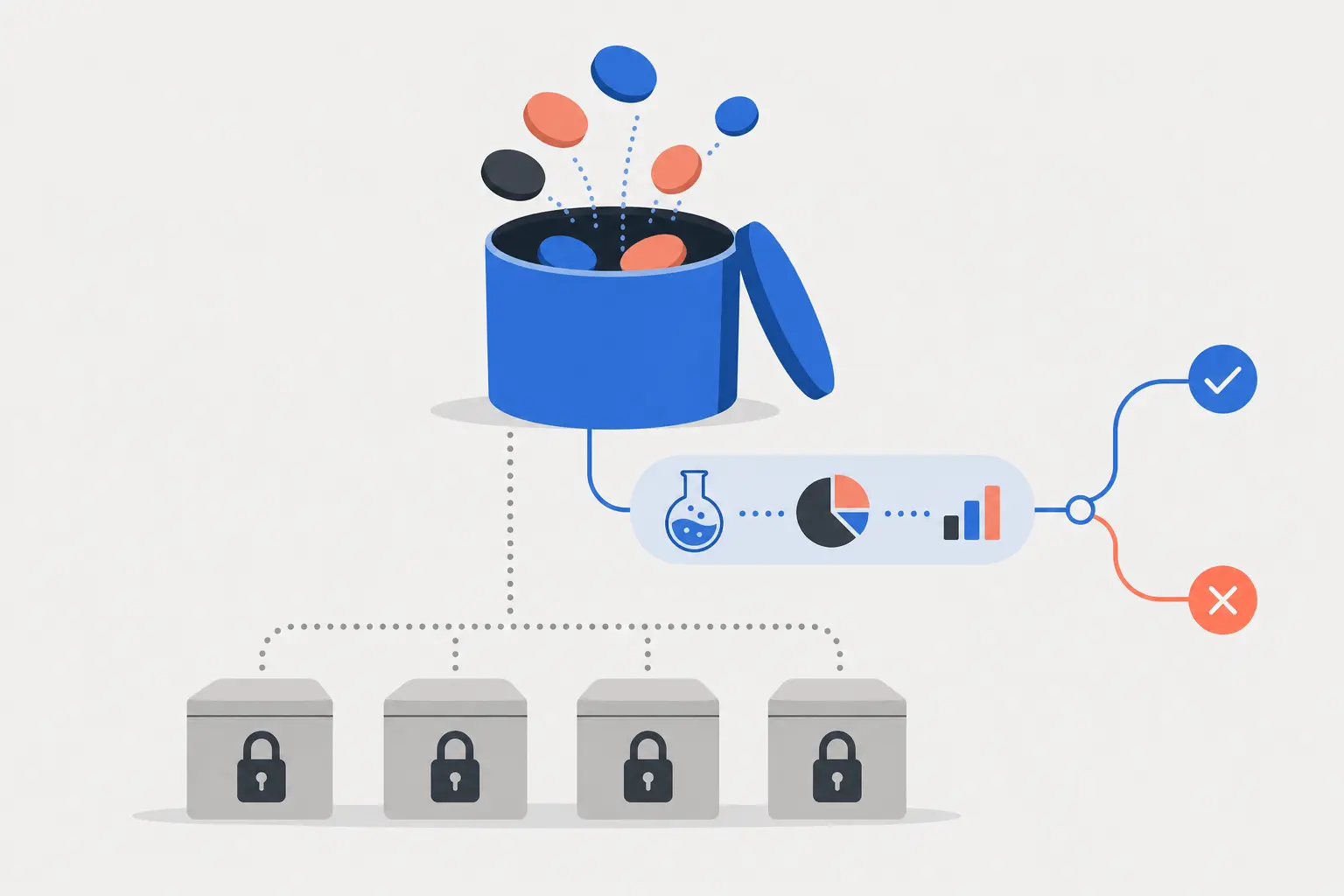
The line was drawn about experimentation budgets, not about these launches, but it applies directly: fund enough testing to settle a procurement question, and never treat the test budget as proof that the technology is production-ready.
Which mistakes cost the most in a buyer evaluation?
Conclusion first: the expensive mistakes are classification errors, not technical ones. Buyers pay for a state of the product that was never promised in writing.
- Equating demo with delivery. A presentation runs on the vendor's data and permissions; your account may not.
- Treating API access as a team workflow. Developer reach is not marketer reach, and MCP support that is "coming soon" is not a shipped dependency.
- Reading beta as general availability. Invitation-only programs cannot anchor a regional campaign plan.
- Ignoring utilization. Gartner's 2025 marketing technology survey put stack utilization at 49%; buying more capability does not create more use.
- Leaving idle licenses in the stack. Zylo's 2026 SaaS Management Index estimates the average organization wastes $19.8M a year on unused SaaS licenses.
- Omitting the failure path. Without a halt switch and a repair owner, a wrong attribute or overspend becomes an operating incident.
What should you do in the next 30 days?
Conclusion first: run one test, on one capability, with one dated decision. The goal is a defensible "green light or no" rather than a larger stack.
- List every capability in the renewal deck and tag it: usable now, API only, pilot, or roadmap.
- Choose the one tagged "usable now" that touches revenue and write its pass condition in a page.
- Invite a buyer-side owner, not the vendor, to verify the output in the production account.
- Add the five checks and a fallback clause to the approval document before the signature.
- Move the "coming soon" items to a learning budget with a review date, not into committed operating spend.
Our next experiment at GlobalSaaSManager is narrow: take one feature our own demo makes look easy, run it with an approved first-party data set in a single market, and measure how many manual steps it takes to produce the promised output. If the steps hold up, the capability moves into committed spend at the next review; if they do not, the roadmap item stays on the learning budget and the invoice waits.
FAQ
Is an announcement the same as general availability?
No. It may describe a live interface, a public API, a limited pilot or a roadmap item. Ask which named account, market and tier can use it today, and require the answer in writing.
What is a reasonable acceptance test length?
One real workflow with representative data and an external verifier is enough. If the test needs months of configuration, the capability is not ready for the budget being requested.
Should we pay for a feature that is "coming soon"?
Only as a learning budget with a decision date. Tie any committed spend or price increase to capabilities that already work under your conditions, and negotiate a remedy for delayed access.
Who should own the test?
A buyer-side owner outside the vendor's team, with authority to stop publication or spend when the output is wrong. That owner also carries the repair path into the contract.
Reference sources
- ContentGrip — product launch vs. marketing capability readiness
- Gartner — 2026 CMO Spend Survey
- Gartner — Marketing Technology topic and 2025 utilization survey
- Zylo — 2026 SaaS Management Index on unused licenses
- GlobalSaaSManager BuyerGuides — agentic marketing control lanes